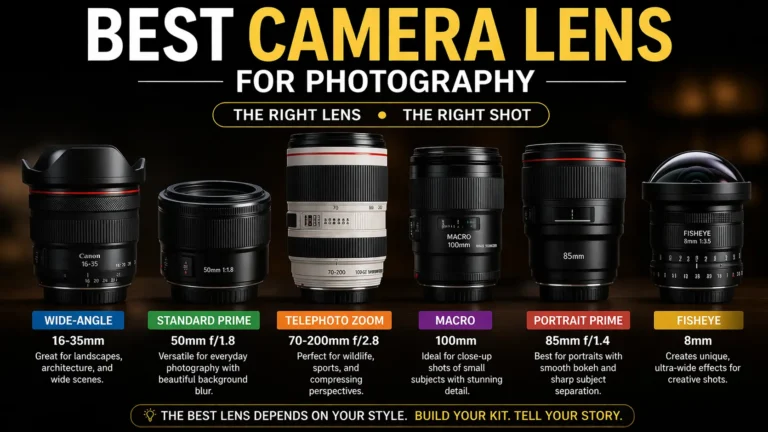
Choosing the best camera lens for photography can be tricky at first. There are so many choices, and it’s not always clear which one you actually need. The lens you use plays a big role in how your photos turn out, including sharpness and background blur. In this guide, I’ll walk you through different camera lenses for photography and help you find a high quality camera lens that fits your needs and improves your photos.
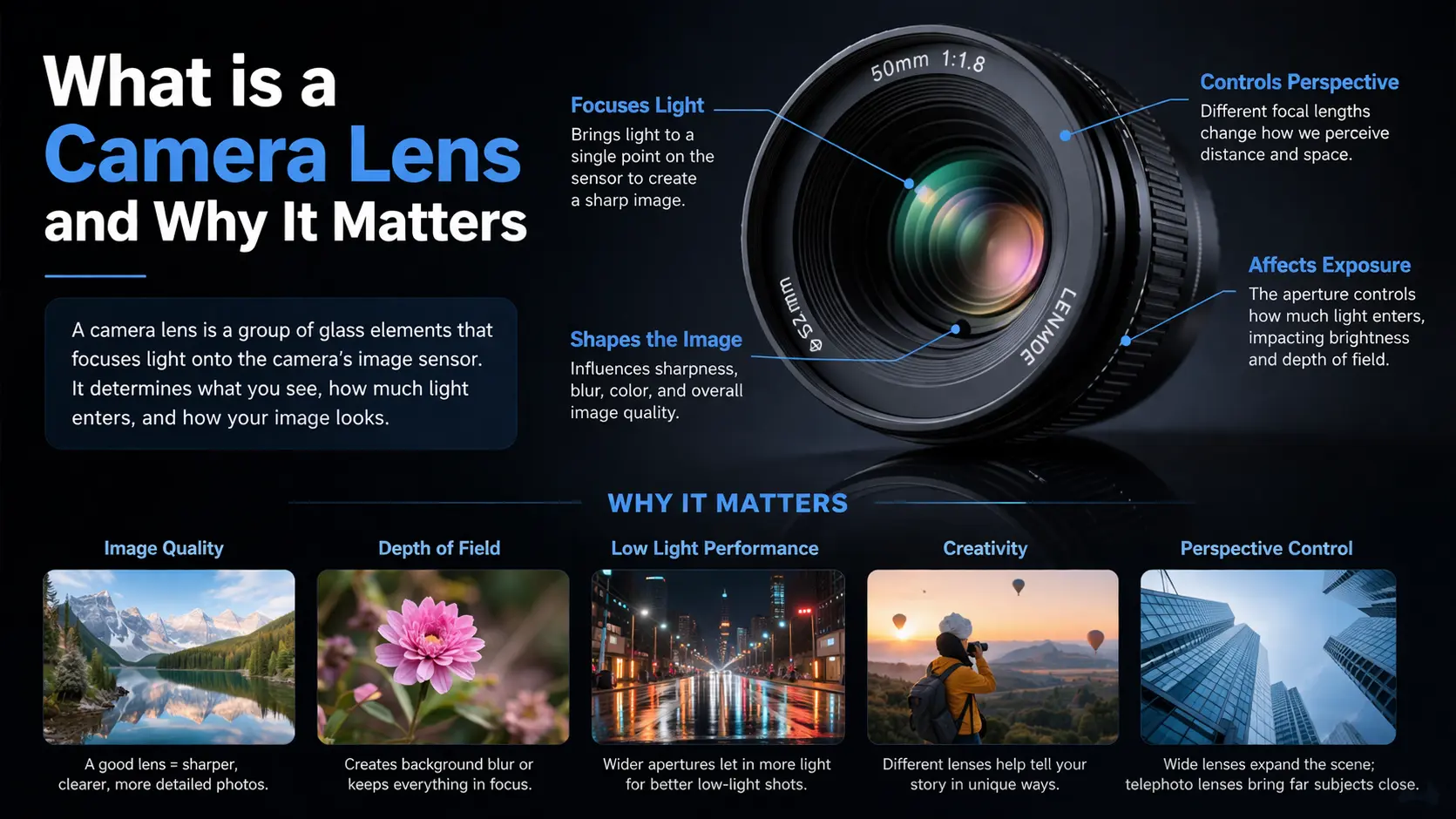
What is a Camera Lens and Why It Matters
A camera lens is the part that lets light enter the camera. It controls how your photo will look in the end. Things like sharpness, brightness, and background blur all depend on the lens.
Many beginners focus only on the camera body. But in reality, the lens matters just as much, sometimes even more. A high quality camera lens can make a big difference, even if your camera is not very expensive.
There are different camera lenses for photography, and each one is made for a specific use. Some work better for portraits, while others are good for wide scenes or far-away subjects. So, choosing the best camera lens for photography is important if you want better results.
Types of Camera Lenses Explained
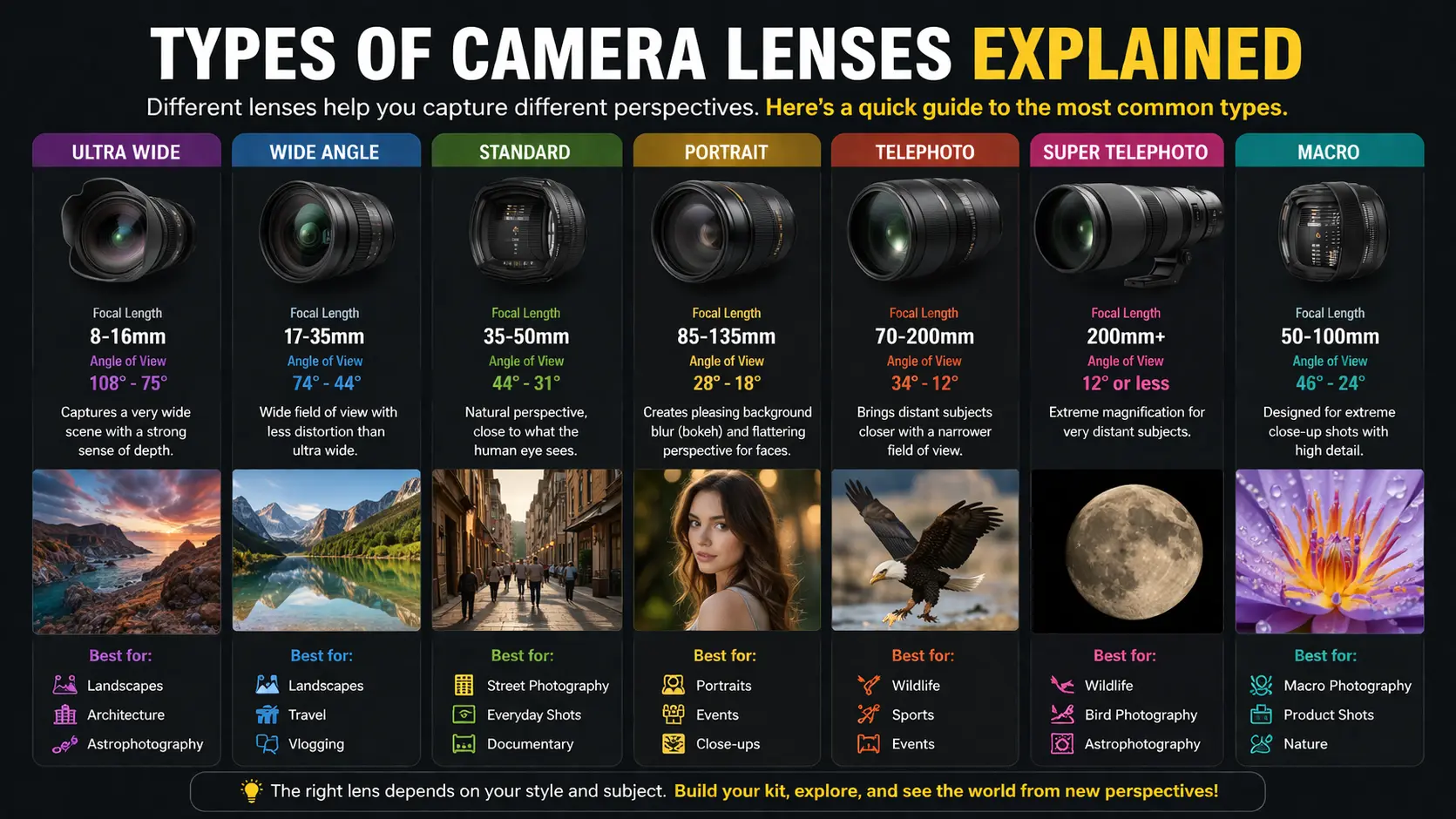
There are many types of camera lenses for photography, and each one works in a different way. Some are simple and sharp, while others give you more flexibility. If you want to choose the best camera lens for photography, you need to understand these basic types first.
Prime Lenses
Prime lenses come with a fixed focal length. This means you cannot zoom in or out. At first, this may feel limiting, but many photographers actually prefer it. These lenses are known for sharp images and better low-light performance.
A prime lens is often seen as a best photography lens for portraits and street shots. It also creates a soft background blur, which many people like. If you want a high quality camera lens with simple use, a prime lens is a solid choice.
Zoom Lenses
Zoom lenses give you more flexibility. You can change the focal length and adjust your frame without moving. This makes them useful in many situations, especially when you cannot get closer to your subject.
Many beginners start with zoom lenses because they are easy to use. A good zoom lens can work as a best camera lens for photography when you need convenience. It may not always match the sharpness of a prime lens, but it covers more range in one lens.
Wide-Angle Lenses
Wide-angle lenses are made to capture a larger scene. They are great for landscapes, travel, and architecture photography. You can fit more into the frame without stepping back.
These camera lenses for photography are helpful when space is limited. They also create a sense of depth in photos. If you enjoy shooting outdoor scenes, a wide-angle lens can be a very useful and professional camera lens option.
Telephoto Lenses
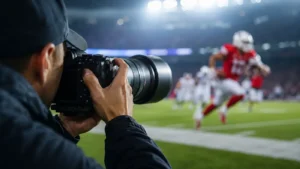
Telephoto lenses are used to capture subjects that are far away. They bring distant objects closer without losing too much detail. This makes them popular for wildlife and sports photography.
A telephoto lens can be a best lens for photography when distance is a problem. It also helps create strong background blur, which looks very professional. However, these lenses are usually larger and may need steady hands or support.
Macro Lenses
Macro lenses are designed for close-up photography. They let you capture small details that are hard to see with the naked eye. Things like insects, flowers, or textures look very sharp with this lens.
If you want a high quality camera lens for detail shots, macro is a great option. It may not be for everyday use, but it adds a unique style to your photography. Many photographers use it to explore creative close-up images.
Best Camera Lens for Photography by Category
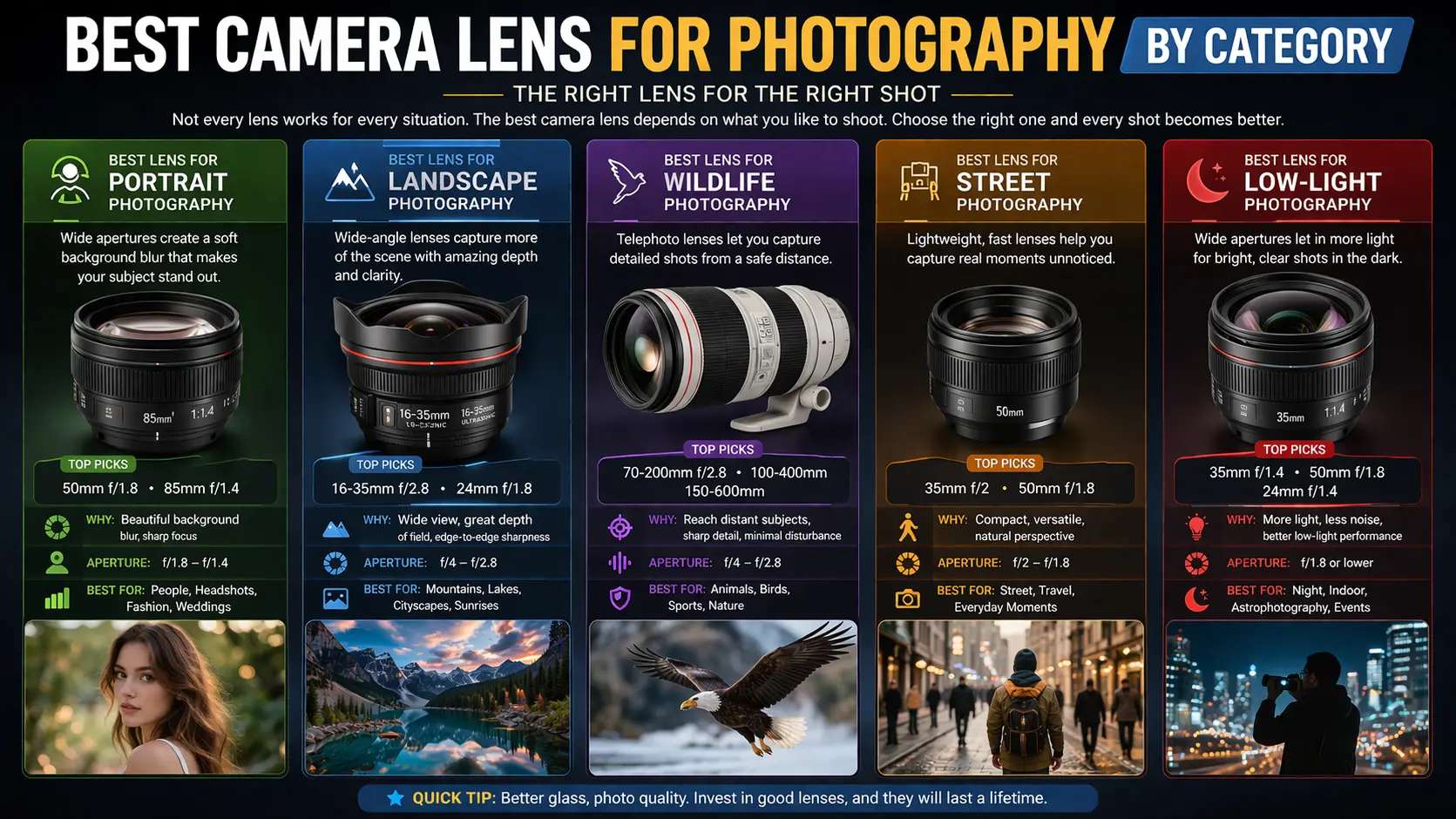
Not every lens works for every situation. The best camera lens for photography depends on what you like to shoot. Some lenses are better for people, while others are made for nature or low light. Knowing this makes it easier to choose the right one.
Best Lens for Portrait Photography
For portraits, a lens with a wide aperture works best. It helps create a soft background blur, which makes the subject stand out. Many photographers prefer prime lenses like 50mm or 85mm for this reason.
If you want a best photography lens for portraits, go for something that gives sharp focus and smooth background. A high quality camera lens with f/1.8 or f/1.4 is often a good pick. It works well for both beginners and professionals.
Best Lens for Landscape Photography
Landscape photography needs a lens that can capture wide scenes. A wide-angle lens is usually the best choice here. It allows you to include more of the sky, land, and details in one frame.
Many camera lenses for photography in this category offer strong depth and clarity. A lens between 16mm and 35mm is commonly used. If you want a professional camera lens for outdoor shots, this type works really well.
Best Lens for Wildlife Photography
Wildlife photography requires distance. You often cannot get close to animals, so a telephoto lens is the best option. It lets you zoom in and capture details from far away.
A lens with 200mm or more is usually recommended. This type of best lens for photography helps you get sharp images without disturbing the subject. Many high quality camera lens options in this range also come with image stabilization.
Best Lens for Street Photography
Street photography is all about capturing real moments. You need a lens that is light, fast, and easy to carry. Prime lenses like 35mm or 50mm are popular for this style.
A compact and best camera lens makes it easier to shoot without drawing attention. These lenses also work well in different lighting conditions. If you want a simple and flexible option, this is a great choice.
Best Lens for Low-Light Photography
Low-light photography needs a lens that can handle less light. A wide aperture lens is very useful in this case. It allows more light to enter, which helps you avoid dark or blurry images.
A lens with f/1.8 or lower is often considered a best mirrorless camera lens or DSLR option for low light. It improves brightness and keeps details clear. If you shoot at night or indoors, this type of best DSLR lens can make a big difference.
Best Camera Lens for Beginners (Budget-Friendly Options)
If you are new to photography, it’s easy to think you need an expensive lens to get good results. Most beginners feel that way at first. But honestly, you can start with something simple and still take really good photos.
A 50mm lens is often a safe starting point. It’s not too expensive, and the results usually look sharp. Many people use it as their first best camera lens for photography because it works for portraits, everyday shots, and even low light. It also helps you learn framing without relying on zoom.
Some beginners prefer zoom lenses instead. They give more range, which feels easier in the beginning. A basic kit lens can still act as a good best lens for photography while you are learning. It may not be perfect, but it gets the job done.
At the end of the day, what matters most is practice. You don’t need the most expensive or professional camera lens right away. Start with a high quality camera lens that fits your budget, use it often, and upgrade later when you actually know what you need.
H2: How to Choose the Right Camera Lens
Cover focal length, aperture, and compatibility (Canon, Nikon, Sony)
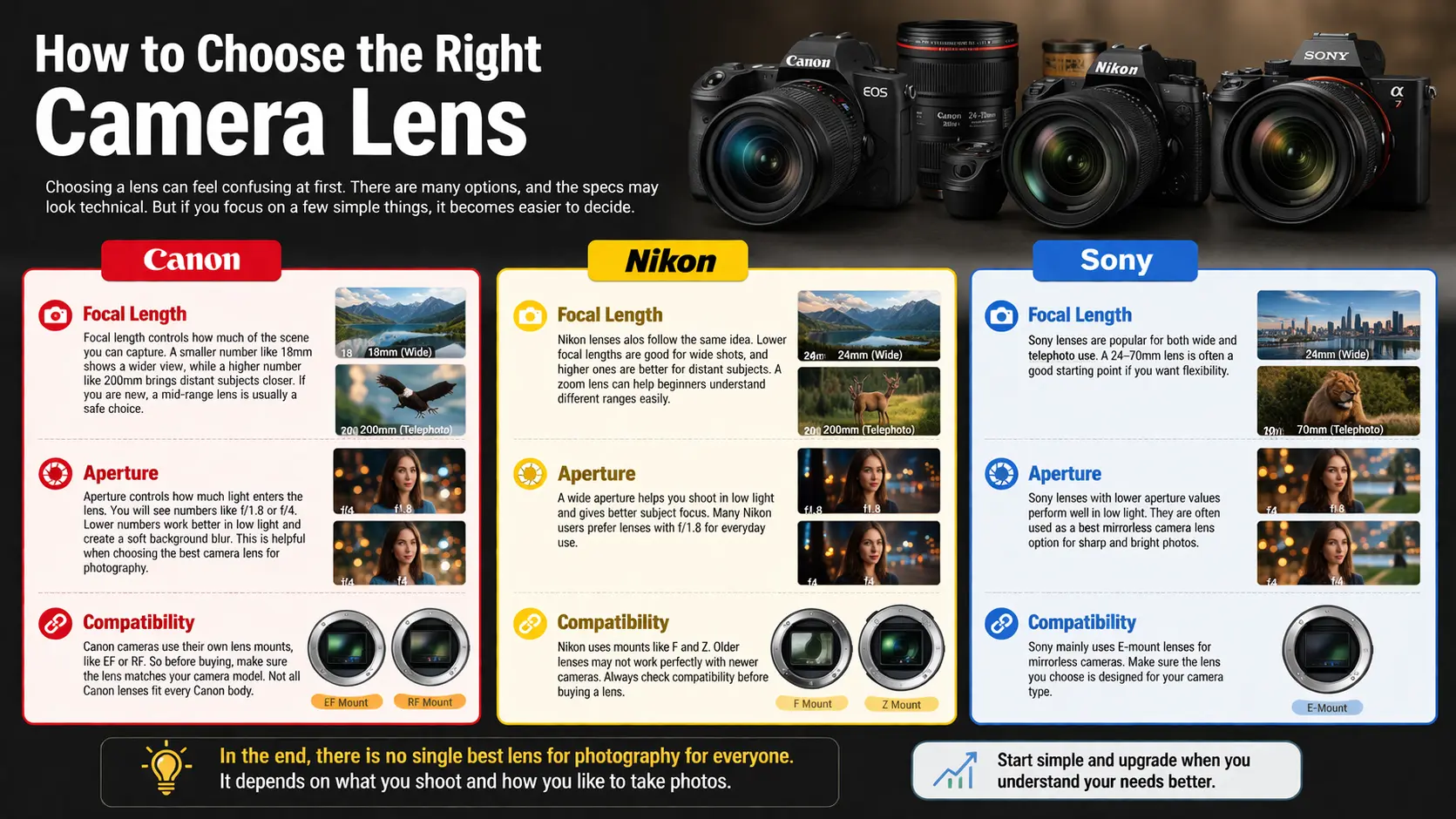
How to Choose the Right Camera Lens
Choosing a lens can feel confusing at first. There are many options, and the specs may look technical. But if you focus on a few simple things, it becomes easier to decide.
Canon
Focal Length
Focal length controls how much of the scene you can capture. A smaller number like 18mm shows a wider view, while a higher number like 200mm brings distant subjects closer. If you are new, a mid-range lens is usually a safe choice.
Aperture
Aperture controls how much light enters the lens. You will see numbers like f/1.8 or f/4. Lower numbers work better in low light and create a soft background blur. This is helpful when choosing the best camera lens for photography.
Compatibility
Canon cameras use their own lens mounts, like EF or RF. So before buying, make sure the lens matches your camera model. Not all Canon lenses fit every Canon body.
Nikon
Focal Length
Nikon lenses also follow the same idea. Lower focal lengths are good for wide shots, and higher ones are better for distant subjects. A zoom lens can help beginners understand different ranges easily.
Aperture
A wide aperture helps you shoot in low light and gives better subject focus. Many Nikon users prefer lenses with f/1.8 for everyday use.
Compatibility
Nikon uses mounts like F and Z. Older lenses may not work perfectly with newer cameras. Always check compatibility before buying a lens.
Sony
Focal Length
Sony lenses are popular for both wide and telephoto use. A 24–70mm lens is often a good starting point if you want flexibility.
Aperture
Sony lenses with lower aperture values perform well in low light. They are often used as a best mirrorless camera lens option for sharp and bright photos.
Compatibility
Sony mainly uses E-mount lenses for mirrorless cameras. Make sure the lens you choose is designed for your camera type.
In the end, there is no single best lens for photography for everyone. It depends on what you shoot and how you like to take photos. Start simple and upgrade when you understand your needs better.
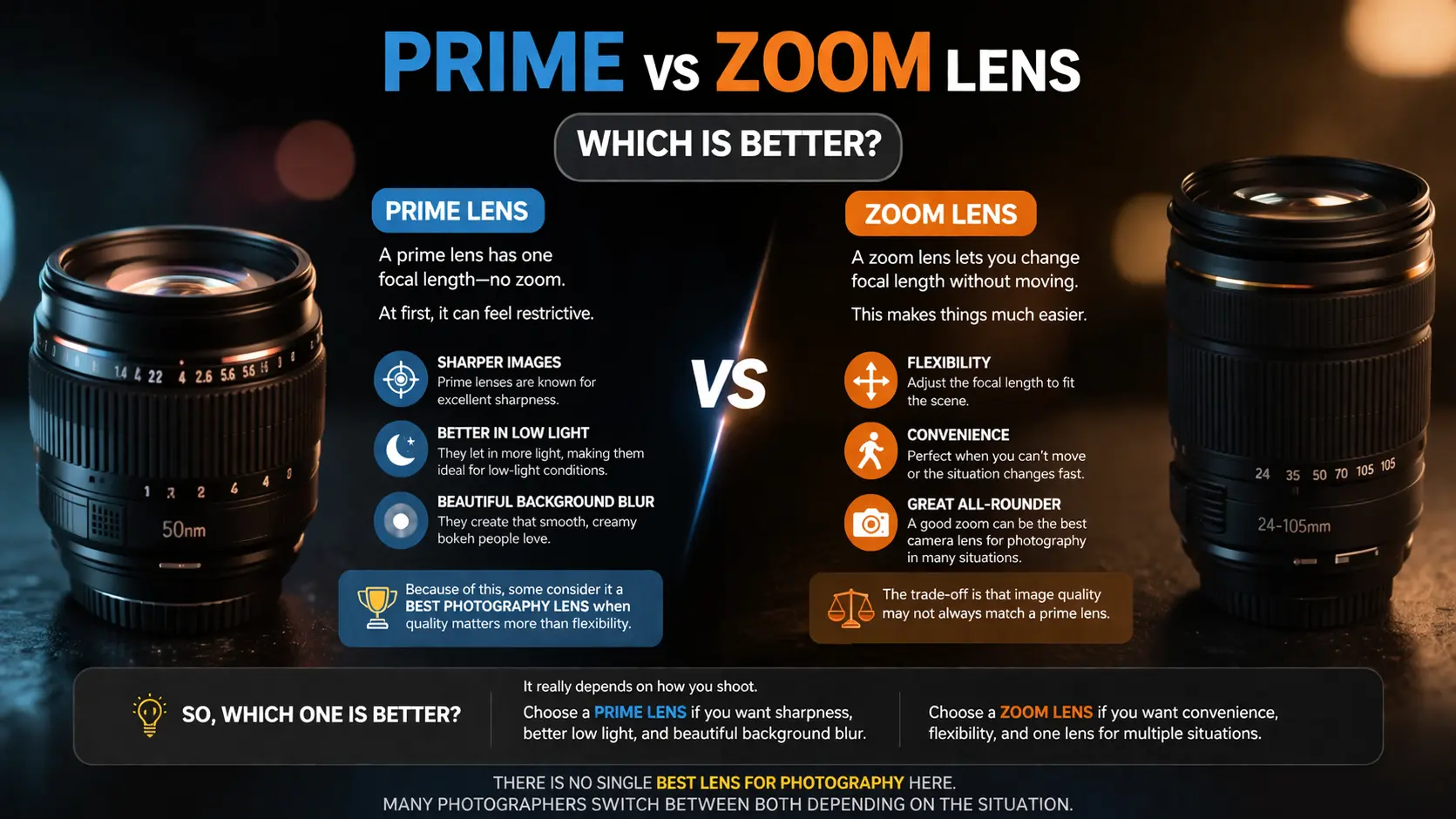
Prime vs Zoom Lens (Which is Better?)
This is one of the most common questions people ask. Should you go with a prime lens or a zoom lens? The answer is not always simple, because both have their own strengths.
Prime Lens
A prime lens does not zoom. You get one focal length, and that’s it. At first, it can feel a bit restrictive. You may find yourself stepping forward or backward more often.
But many photographers actually like this. Prime lenses are known for sharp images and better low-light performance. They also give that soft background blur people love. Because of this, some consider it a best photography lens when quality matters more than flexibility.
Zoom Lens
Zoom lenses work differently. You can adjust the focal length without moving. This makes things easier, especially when you cannot change your position.
That’s why a lot of beginners start with zoom lenses. It feels more practical. A good zoom can even act as a best camera lens for photography when you want one lens for multiple situations. The trade-off is that image quality may not always match a prime lens.
So, Which One is Better?
It really depends on how you shoot. If you care more about sharpness and background blur, a prime lens makes sense. If you want convenience and flexibility, a zoom lens is the easier option.
There is no single best lens for photography here. Many photographers switch between both depending on the situation.
Common Mistakes When Choosing a Lens
Many beginners make small mistakes when choosing a lens, and that’s completely normal. One common issue is focusing too much on the camera body while ignoring the lens. In reality, the lens often makes a bigger difference in photo quality. A high quality camera lens can improve your results even if your camera is basic.
Another mistake is choosing a lens without thinking about actual needs. Some people buy a zoom lens for portraits or pick a telephoto lens but rarely use it. Others go for the cheapest option and then feel disappointed with the results. Choosing the best camera lens for photography becomes much easier when you understand your style and avoid rushing the decision.
Tips to Get the Best Results from Your Lens
Getting good results is not only about buying the best camera lens for photography. How you use it also matters a lot. Many people have a good lens but still struggle because they don’t understand how to use it properly. Small habits can make a big difference in your final photos.
Try to keep your lens clean and avoid touching the glass. Learn how your lens works in different lighting conditions, especially if you are using a high quality camera lens. Also, don’t rely too much on zoom. Moving a bit closer or changing your angle often gives better results. Practice is important here, and over time you will understand what works best for you.
Another useful tip is to experiment with settings like aperture and focus. This helps you get more control over your photos. Even a simple setup can give strong results if used correctly. In the end, the best lens for photography is the one you know how to use well.
Conclusion
Choosing the best camera lens for photography does not have to be complicated. Once you understand the basics, it becomes much easier to decide what works for you. The right lens can improve your photos more than you might expect.
There is no single lens that fits everyone. Some people prefer prime lenses, while others go with zoom for flexibility. The key is to pick a high quality camera lens that matches your style and needs. Take your time, practice often, and you will see better results over time.