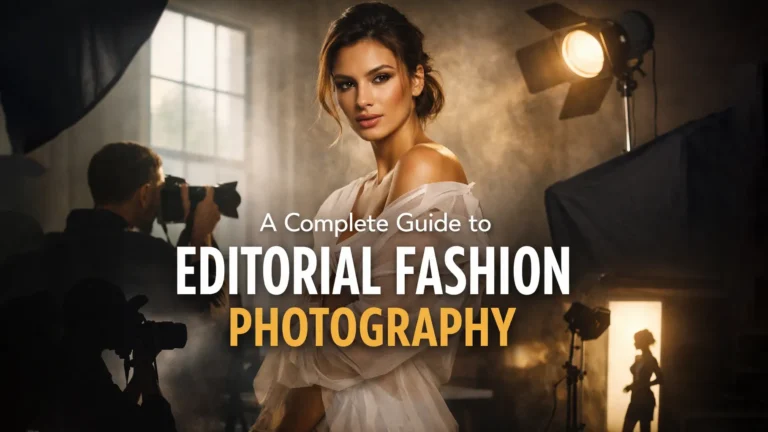
Editorial fashion photography focuses on storytelling, mood, and creative style rather than direct selling. In this guide, you will learn what editorial fashion photography is, how it differs from commercial work, and how to plan, shoot, and edit a strong editorial project. In addition, you will discover key tips to build a professional portfolio and get published.
What Is Editorial Fashion Photography?
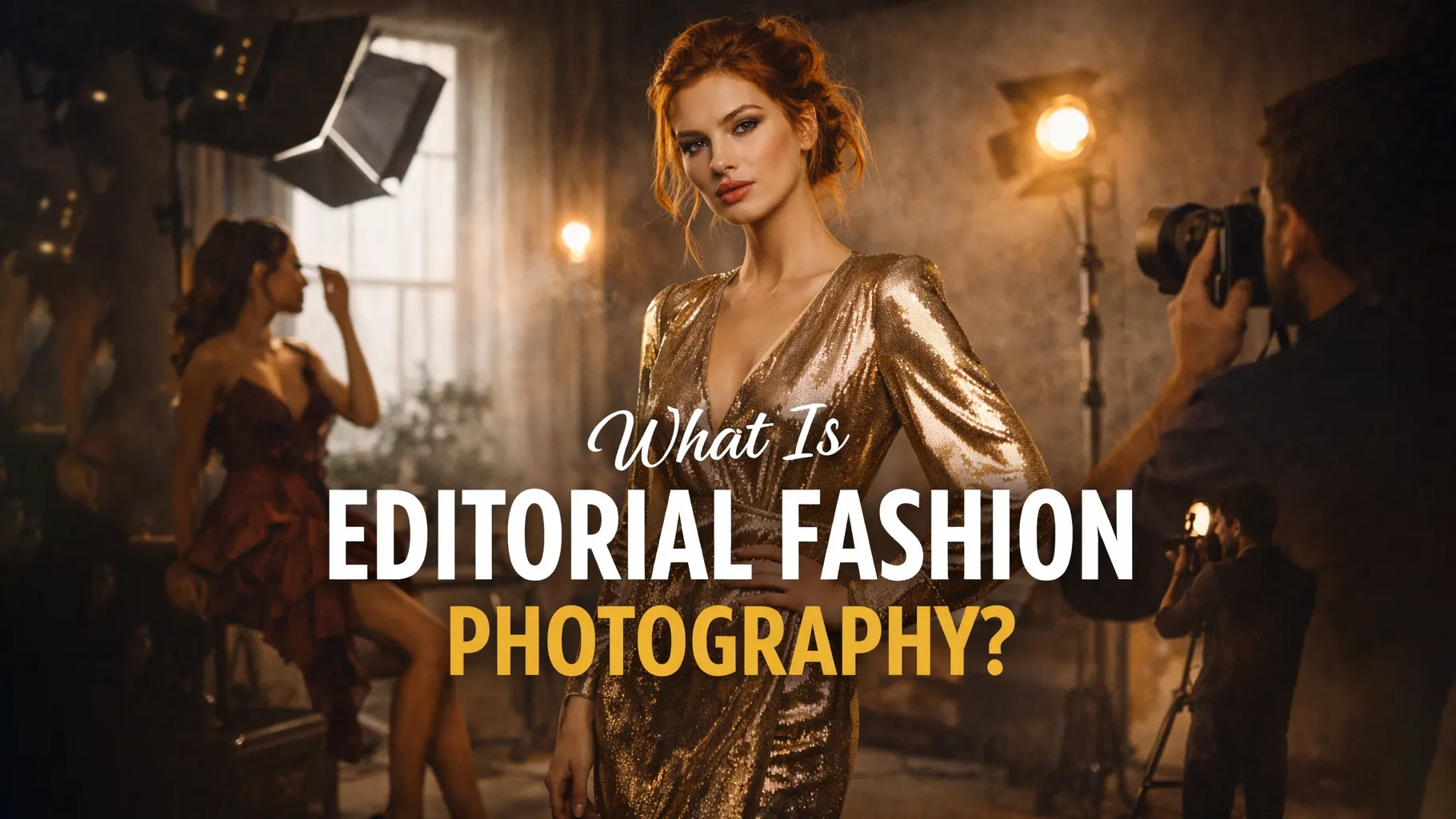
Editorial fashion photography is a style of fashion photography that tells a story. Instead of focusing only on selling clothes, it focuses on mood, concept, and creative expression. In other words, the goal is to create images that feel like a visual story.
The main purpose of editorial fashion photography is storytelling. For example, a shoot may follow a theme such as vintage romance, street culture, or high-end luxury. Therefore, every detail—such as styling, location, lighting, and pose—supports that concept. As a result, the final images look artistic and meaningful.
This type of photography is widely used in fashion magazines like Vogue and Harper’s Bazaar. In addition, many digital publications and online fashion platforms publish editorial-style shoots. Today, even fashion brands use editorial photography for campaigns because it builds strong brand identity and emotional connection.
Editorial vs Commercial Fashion Photography
Many people confuse editorial fashion photography with commercial fashion photography. However, their goals are very different. Therefore, understanding this difference is important before planning any fashion photoshoot.
Key Differences
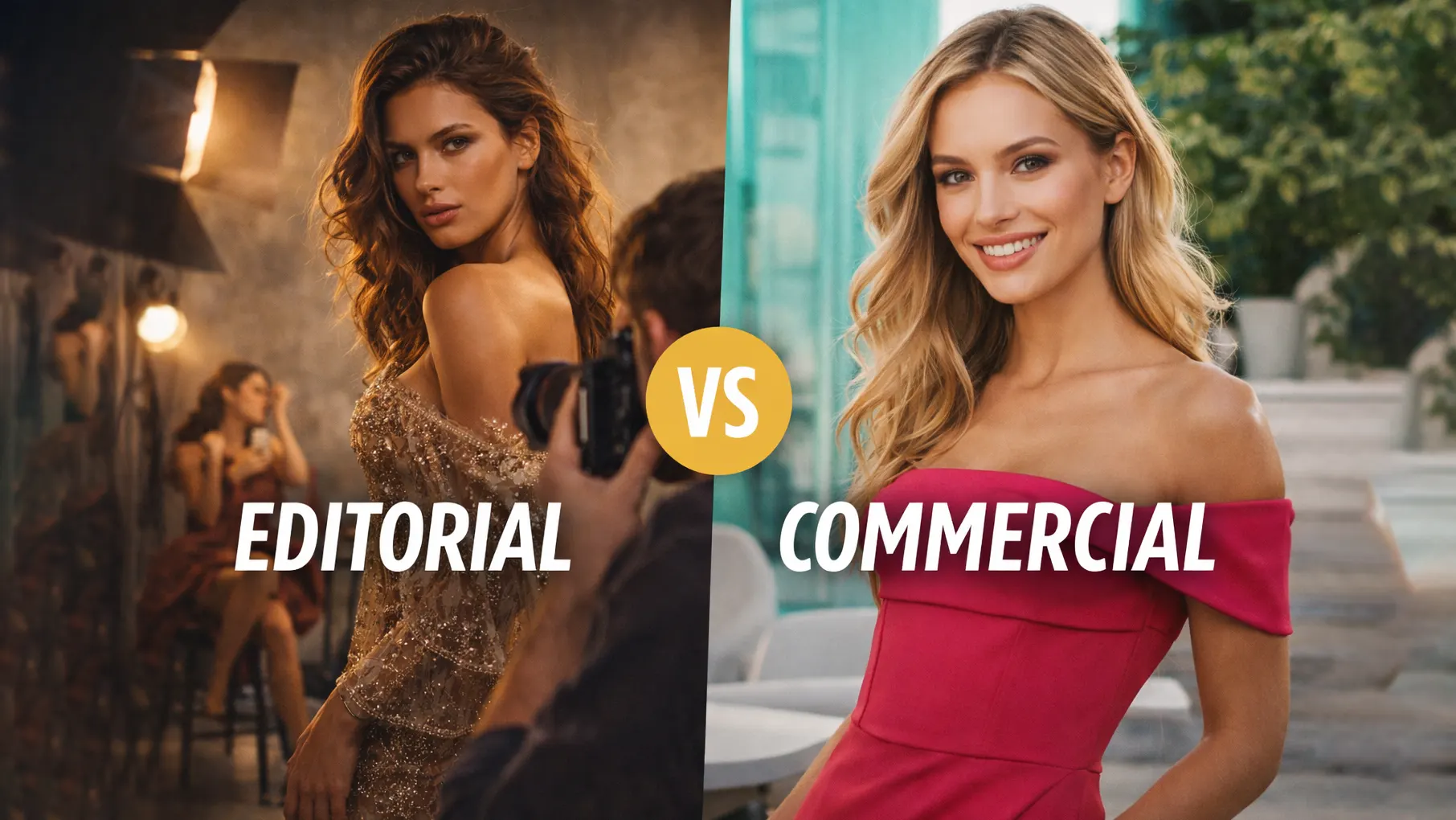
Editorial fashion photography focuses on storytelling. It creates a mood, theme, or concept that feels artistic and expressive. In most cases, the images appear in fashion magazines or digital publications.
In contrast, commercial fashion photography focuses on selling a product. The goal is simple: show the clothing clearly and attract buyers. As a result, brands often use commercial images for websites, ads, and social media campaigns.
Another key difference is creative control. Editorial shoots allow more freedom. However, commercial shoots must follow brand guidelines and marketing goals.
Creativity vs Sales Focus
Editorial fashion photography gives photographers space to experiment. For example, they can use dramatic lighting, unique poses, and bold styling. Because the goal is storytelling, creativity comes first.
On the other hand, commercial fashion photography puts sales first. The product must stand out. Therefore, lighting is clean, backgrounds are simple, and details are sharp. In most cases, brands avoid heavy shadows or complex concepts.
Visual Example Explanation
Imagine a high-end fashion magazine spread. The model stands in a dramatic city setting with cinematic lighting. The image tells a story and creates emotion. That is editorial fashion photography.
Now, think about an online clothing store. The model stands against a white background, and the outfit is fully visible from different angles. This is commercial fashion photography.
In short, editorial fashion photography inspires the audience. Meanwhile, commercial photography convinces them to buy. Both are important in fashion photography, but their purpose is not the same.
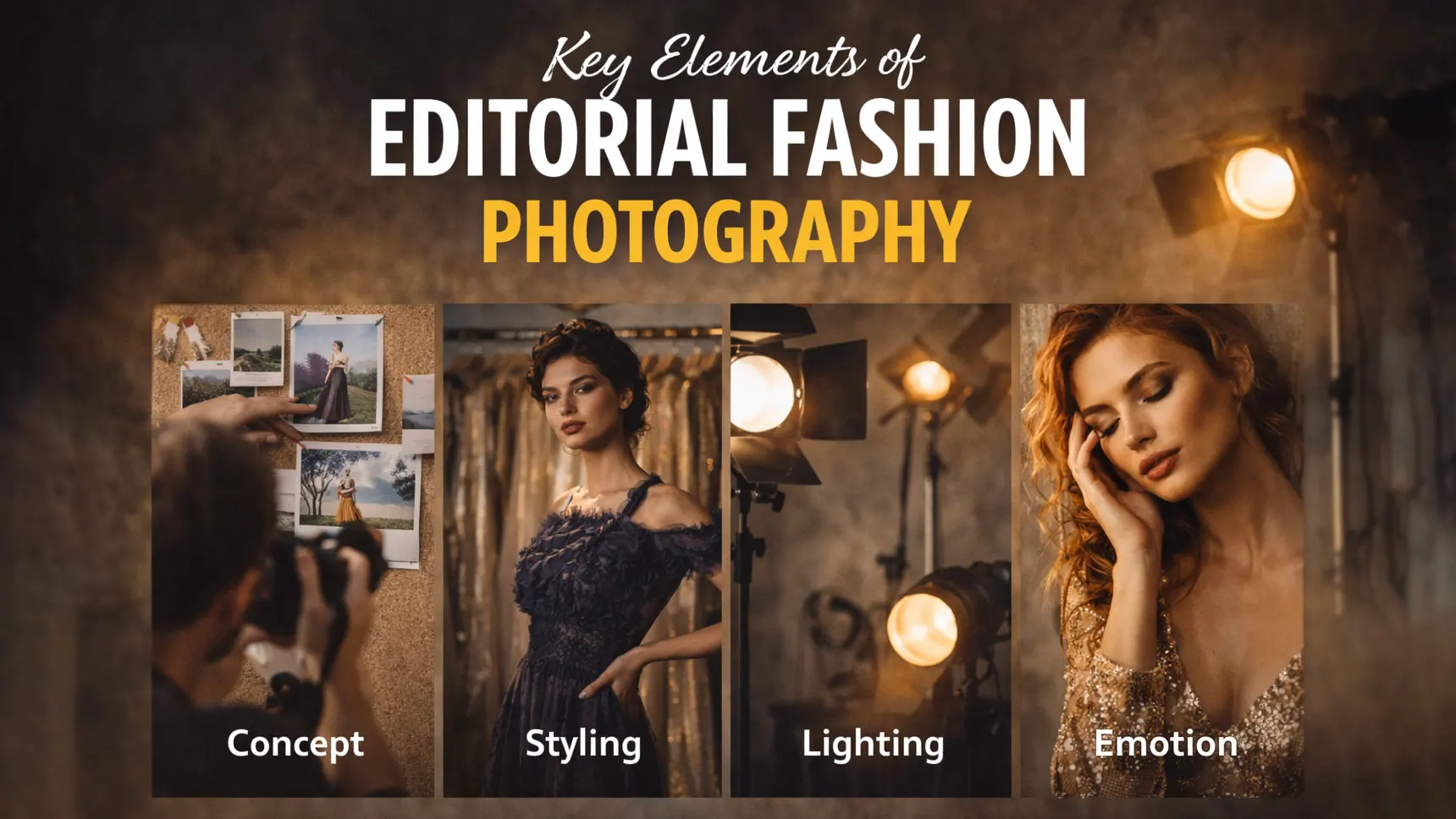
Key Elements of Editorial Fashion Photography
To create powerful editorial fashion photography, you need more than a good camera. Instead, you need a clear vision and strong creative direction. Each element must support the story. Therefore, planning plays a major role in every successful fashion photoshoot.
Strong Concept & Story
Every editorial shoot starts with a concept. In other words, you need a clear theme or message before taking any photos. For example, the story could focus on modern street style, vintage romance, or high-fashion drama.
Because editorial fashion photography is story-driven, the concept guides everything. As a result, styling, lighting, and location all connect to one main idea.
Styling & Creative Direction
Styling is one of the most important parts of fashion photography. Clothing, accessories, hair, and makeup must match the theme. In addition, a strong creative director helps keep the visual story consistent.
Unlike basic fashion photography, editorial work allows bold choices. However, every styling decision should support the overall mood.
Location & Set Design
Location adds depth and emotion to the shoot. For example, a rooftop creates a modern urban feel, while a studio set can create a clean, dramatic look.
Set design also matters. Props, textures, and background details improve visual impact. Therefore, choosing the right environment strengthens the story.
Lighting Style
Lighting defines the mood of editorial fashion photography. Soft natural light creates a dreamy look. On the other hand, dramatic shadows create high-fashion intensity.
Many professional fashion photographers experiment with creative lighting setups. As a result, lighting becomes part of the storytelling process.
Model Expression & Mood
Finally, expression brings the story to life. A strong pose and confident body language can change the entire image. Therefore, directing the model clearly is essential.
In fashion magazine photography, emotion often matters more than perfect posing. Because of this, natural movement and authentic expressions create stronger results.
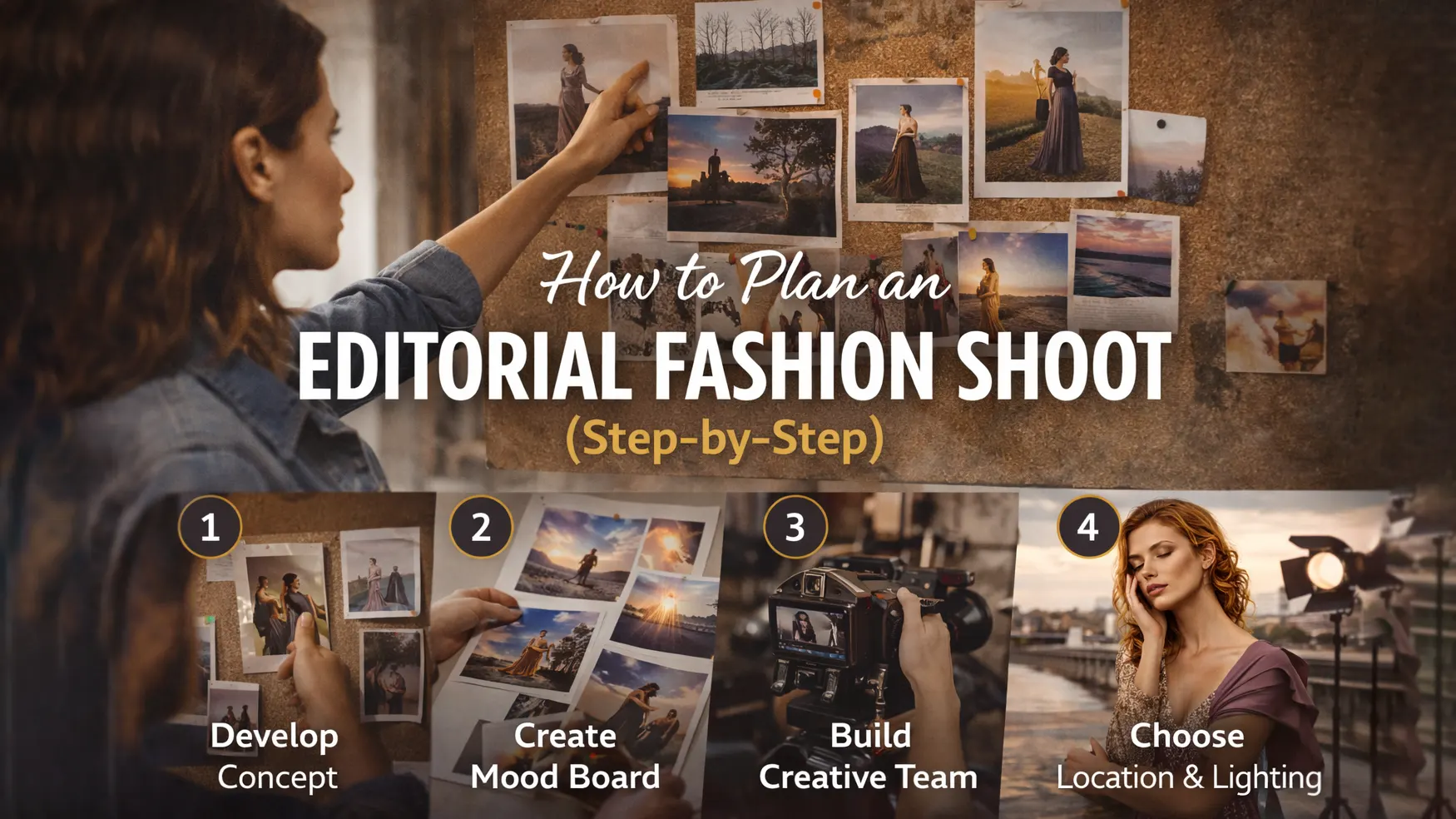
How to Plan an Editorial Fashion Shoot (Step-by-Step)
Planning is the foundation of strong editorial fashion photography. Without a clear plan, even creative ideas can fail. Therefore, following a simple step-by-step process helps you stay focused and professional throughout the fashion photoshoot.
Develop a Concept
First, decide on a clear theme or story. For example, you might explore urban street style, luxury minimalism, or bold fashion magazine photography inspired by high-end brands. Because editorial fashion photography is story-driven, your concept should guide styling, lighting, and mood. Write your idea in simple terms so the direction stays clear.
Create a Mood Board
Next, create a mood board to visualize your ideas. You can collect reference images for poses, colors, lighting, and wardrobe. This step is important because it aligns your creative vision with the team. As a result, everyone understands the tone and style before the shoot begins.
Build Your Creative Team
Strong fashion photography depends on teamwork. Therefore, choose a stylist, makeup artist, and model who understand the concept. In addition, communicate clearly with everyone involved. When the team shares the same vision, the final images look more polished and cohesive.
Choose Location & Lighting
Location and lighting shape the mood of your editorial fashion photography. For example, outdoor settings create depth and natural texture, while studio setups allow full control. At the same time, your fashion photography lighting should match the story. Soft light creates a dreamy look, whereas dramatic lighting adds intensity.
Execute the Shoot
Finally, bring everything together on shoot day. Follow your plan, but remain flexible because creative moments can happen unexpectedly. Guide the model with clear direction and review shots during the session. As a result, your editorial fashion photography project will feel strong, cohesive, and ready for publication or portfolio use.
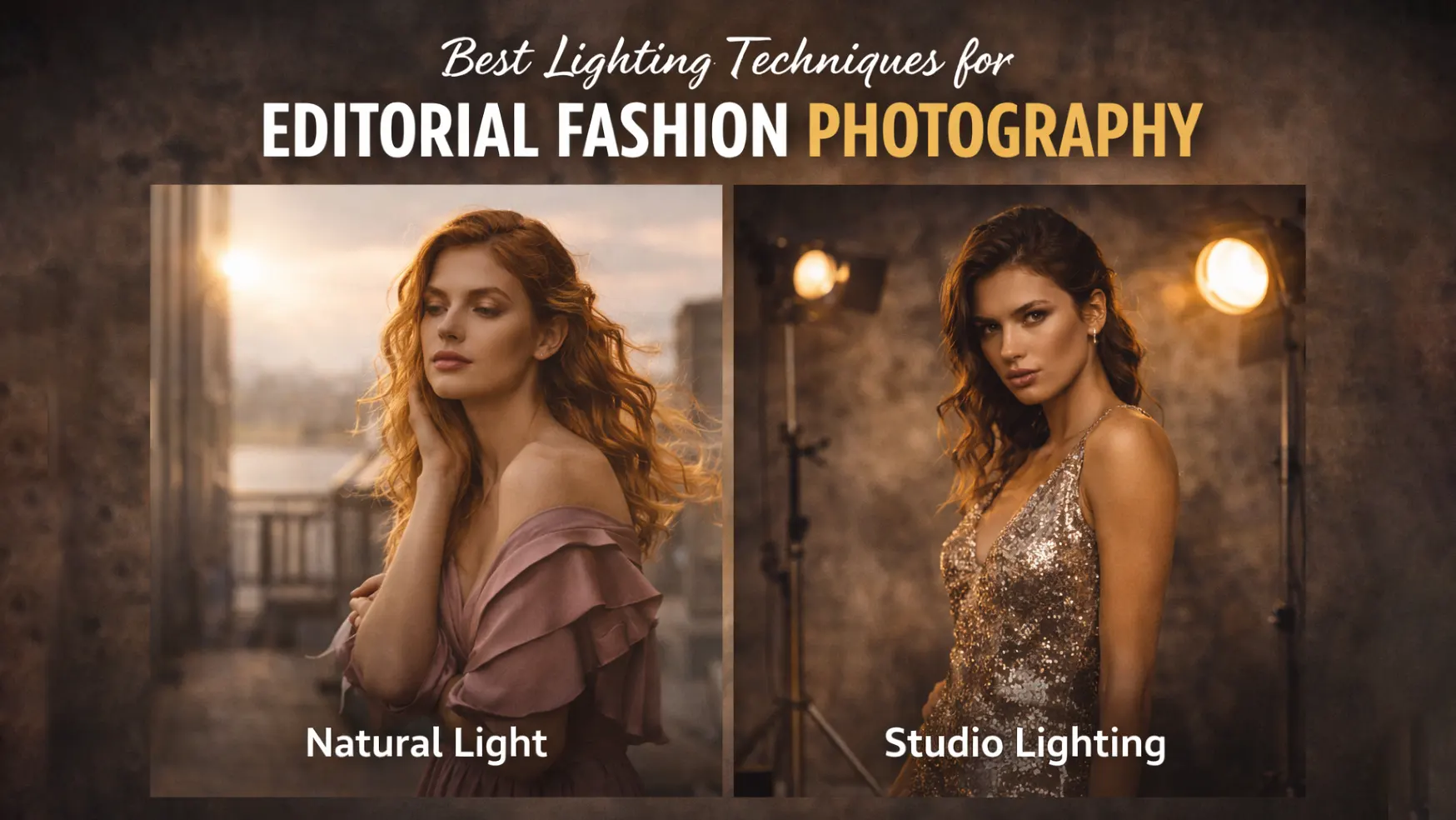
Best Lighting Techniques for Editorial Fashion Photography
Lighting is one of the most powerful tools in editorial fashion photography. It shapes the mood, defines texture, and supports the overall story. Therefore, choosing the right lighting technique is essential for creating strong and professional fashion photography results.
Natural Light Setup
Natural light is simple yet highly effective. For example, window light creates soft shadows and smooth skin tones, which work well for romantic or lifestyle-inspired fashion photoshoots. However, timing matters. Early morning or late afternoon light produces softer tones and better depth. In addition, reflectors can help control shadows and create balanced exposure.
Studio Lighting Setup
Studio lighting offers full control, which is why many professional fashion photographers prefer it for magazine and campaign work. A standard setup usually includes a key light, fill light, and background light. This structure keeps the subject sharp while maintaining clean detail. At the same time, softboxes and beauty dishes help create polished and controlled fashion photography lighting.
Dramatic & High-Fashion Lighting
Dramatic lighting adds depth and emotion, which makes it ideal for editorial fashion photography. Hard light and strong shadows create bold, high-fashion visuals often seen in fashion magazine photography. Side lighting and backlighting can also add dimension and separation from the background. However, balance is important because too much contrast may hide important details.
In short, lighting is not just technical—it is creative. When used strategically, it transforms a simple shoot into powerful editorial fashion photography.
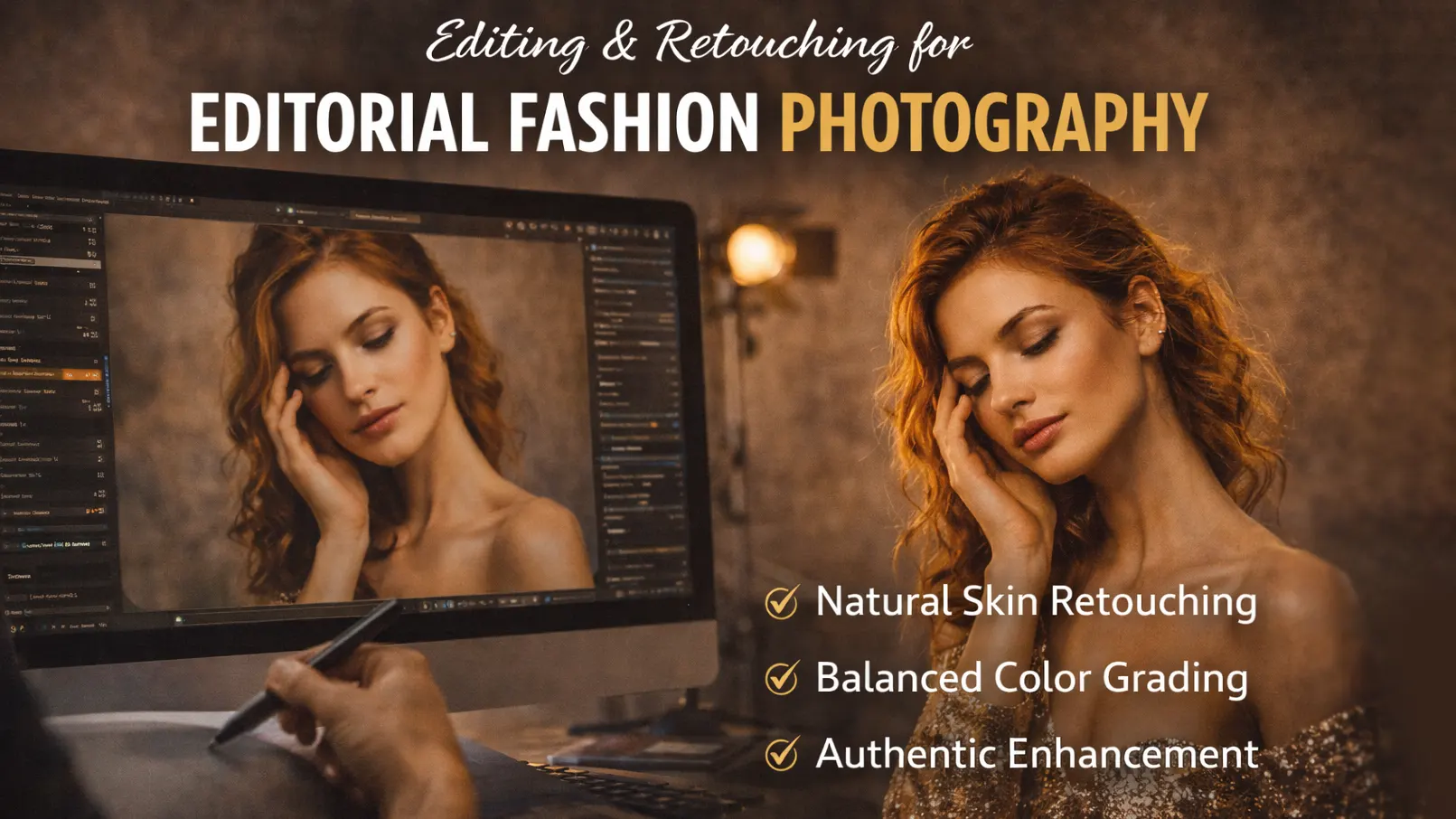
Editing & Retouching for Editorial Fashion Photography
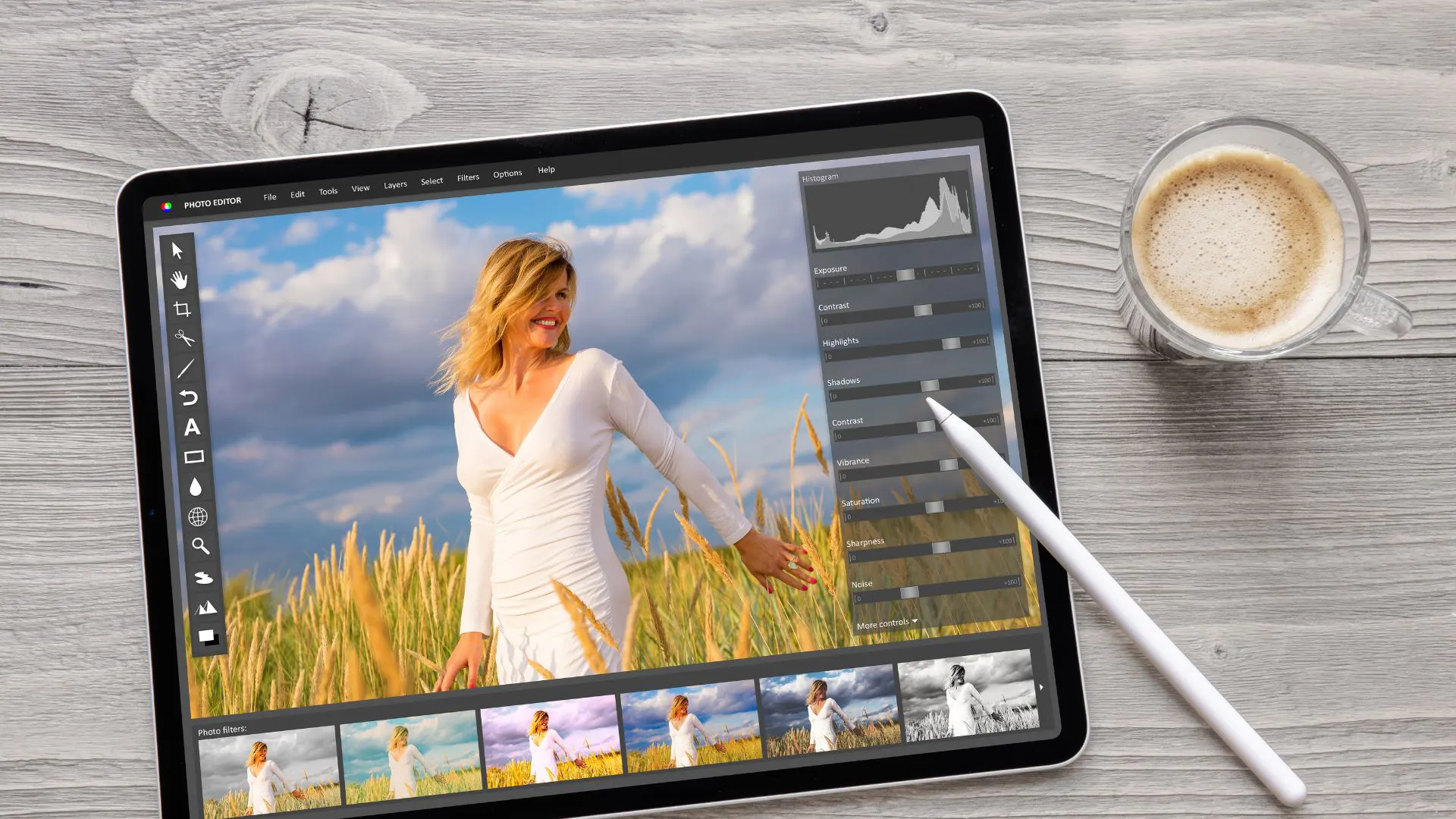
Editing is a crucial step in editorial fashion photography. While the shoot builds the story, post-production refines it. Therefore, your editing style should enhance the mood without overpowering the image. Strong fashion photography always looks polished, yet natural.
Editorial Color Grading
Color grading sets the emotional tone of the image. For example, warm tones can create a soft and romantic feel, while cooler tones add a modern and dramatic mood. Because editorial fashion photography focuses on storytelling, the color palette must match the original concept.
However, avoid extreme filters. Instead, adjust contrast, highlights, and shadows carefully. As a result, the final image will look cohesive and professional, similar to fashion magazine photography.
Skin Retouching Approach
Skin retouching should be clean but realistic. Unlike beauty photography, editorial work does not require heavy smoothing. In fact, keeping natural texture makes the image look authentic.
Use light retouching to remove temporary blemishes and distractions. At the same time, preserve pores and fine details. This balanced approach helps you maintain a high-end yet natural result.
Maintaining Realism
Realism is essential in editorial fashion photography. Over-editing can remove emotion and depth. Therefore, always compare your edited image with the original shot.
In addition, focus on enhancing light, color, and composition rather than changing body shape or facial structure. As a result, your fashion photography portfolio will look refined, modern, and trustworthy.
How to Start Editorial Fashion Photography as a Beginner
Starting editorial fashion photography may feel challenging at first. However, with the right steps, you can build experience and grow quickly. Instead of waiting for big opportunities, focus on small projects that improve your fashion photography skills.
Building a Portfolio
Your portfolio is your strongest tool. Therefore, begin by creating 2–3 concept-based shoots that show storytelling and creative direction. Even if the budget is small, focus on strong styling, lighting, and mood.
In addition, keep your portfolio clean and consistent. Show your best fashion photography work, not everything you shoot. As a result, potential clients and magazines will see your clear style.
Finding Models
At the beginning, you may not have access to professional agencies. However, you can collaborate with local models, fashion students, or aspiring influencers. Social media platforms and creative communities are great places to connect.
Make sure to share your concept and mood board clearly. When everyone understands the vision, the shoot feels more professional and organized.
Getting Published
Getting published is a major goal in editorial fashion photography. First, research fashion magazine photography platforms that accept submissions. Many digital magazines welcome new photographers.
Follow their submission guidelines carefully. Because each magazine has different rules, attention to detail matters. Over time, consistent quality and strong storytelling will increase your chances of publication.
In short, start small, stay consistent, and keep improving. With practice and planning, you can build a strong foundation in editorial fashion photography.
Common Mistakes to Avoid
Even experienced photographers make mistakes in editorial fashion photography. However, avoiding a few common errors can greatly improve your results. Because this style depends on storytelling and visual impact, small issues can weaken the final outcome.
One major mistake is weak storytelling. If the concept is unclear, the images will look random instead of connected. Therefore, always define a strong theme before the shoot. Every detail—from styling to lighting—should support that story.
Another common problem is over-editing. While retouching improves quality, too much smoothing or heavy color grading can remove depth and realism. As a result, the images may look artificial instead of professional. Keep edits clean and natural so the fashion photography feels authentic.
Poor styling coordination can also hurt the shoot. For example, if wardrobe, makeup, and location do not match, the story becomes confusing. In editorial fashion photography, consistency is key. When all elements align, the final images look powerful and publication-ready.
Conclusion
Editorial fashion photography is more than taking stylish pictures. It is about telling a strong visual story through concept, styling, lighting, and emotion. Throughout this guide, you learned how it differs from commercial work, how to plan a shoot step by step, and how editing and lighting shape the final result. When all elements work together, fashion photography becomes powerful and meaningful.
If you are just starting, begin with small creative projects and focus on building a strong portfolio. At the same time, keep studying fashion magazine photography and current trends to improve your skills. With practice, consistency, and clear storytelling, you can grow as a professional fashion photographer and create impactful editorial fashion photography that stands out.
Frequently Asked Questions (FAQ)
1. What is editorial fashion photography?
Editorial fashion photography is a style of fashion photography that focuses on storytelling. Instead of directly selling a product, it creates a mood or concept. These images usually appear in fashion magazines and digital publications.
2. What is the difference between editorial and commercial fashion photography?
Editorial fashion photography tells a creative story, while commercial photography focuses on selling clothing or products. Therefore, editorial work allows more artistic freedom, whereas commercial shoots follow strict brand guidelines.
3. How do you plan an editorial fashion photoshoot?
First, develop a clear concept. Next, create a mood board and build your creative team. Finally, choose the right location and lighting that match the story. Planning is essential for strong editorial fashion photography.
4. What lighting is best for editorial fashion photography?
Both natural light and studio lighting work well. For example, soft natural light creates a dreamy look, while dramatic studio lighting adds intensity. The best option depends on your concept and creative direction.
5. How do beginners start in editorial fashion photography?
Beginners should start by building a small portfolio with concept-based shoots. In addition, collaborating with local models and stylists helps build experience. Over time, consistent practice improves results.
6. How do you get published in a fashion magazine?
To get published, research fashion magazine photography platforms that accept submissions. Then, follow their guidelines carefully. Strong storytelling and professional editing increase your chances.
7. What camera settings are best for fashion photography?
Most professional fashion photographers use low ISO, a wide aperture such as f/2.8–f/5.6, and a proper shutter speed for sharp images. However, settings may change depending on lighting conditions.
8. How important is retouching in editorial fashion photography?
Retouching is important, but it should remain natural. Heavy editing can remove texture and realism. Therefore, focus on clean skin retouching and balanced color grading.
9. Can brands use editorial fashion photography for marketing?
Yes, many brands use editorial fashion photography to build identity and emotional connection. Although it is creative, it can still support brand storytelling and campaign visuals.
10. How do you build a strong fashion photography portfolio?
Select your best work and keep the style consistent. In addition, show variety in lighting, concept, and mood. A focused portfolio helps you stand out as a professional fashion photographer.