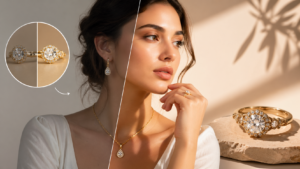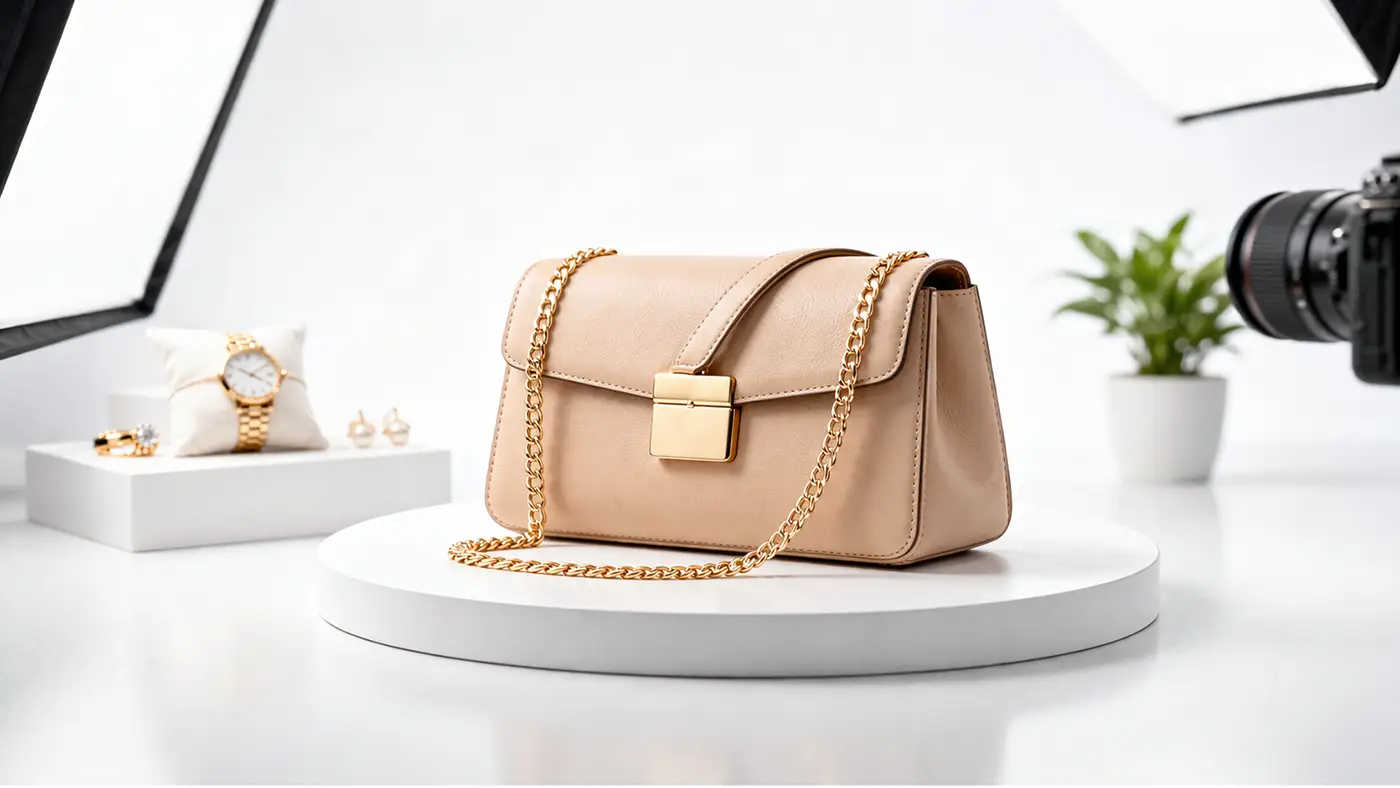
Close-up jewelry photography requires capturing the intricate details, sparkle, and craftsmanship of each piece. To get professional results, you need to choose the right camera and macro lens, control the light, and the reflections. This guide has everything you need to know about cameras and lenses, as well as how to pose, set up lighting, and edit your photos.
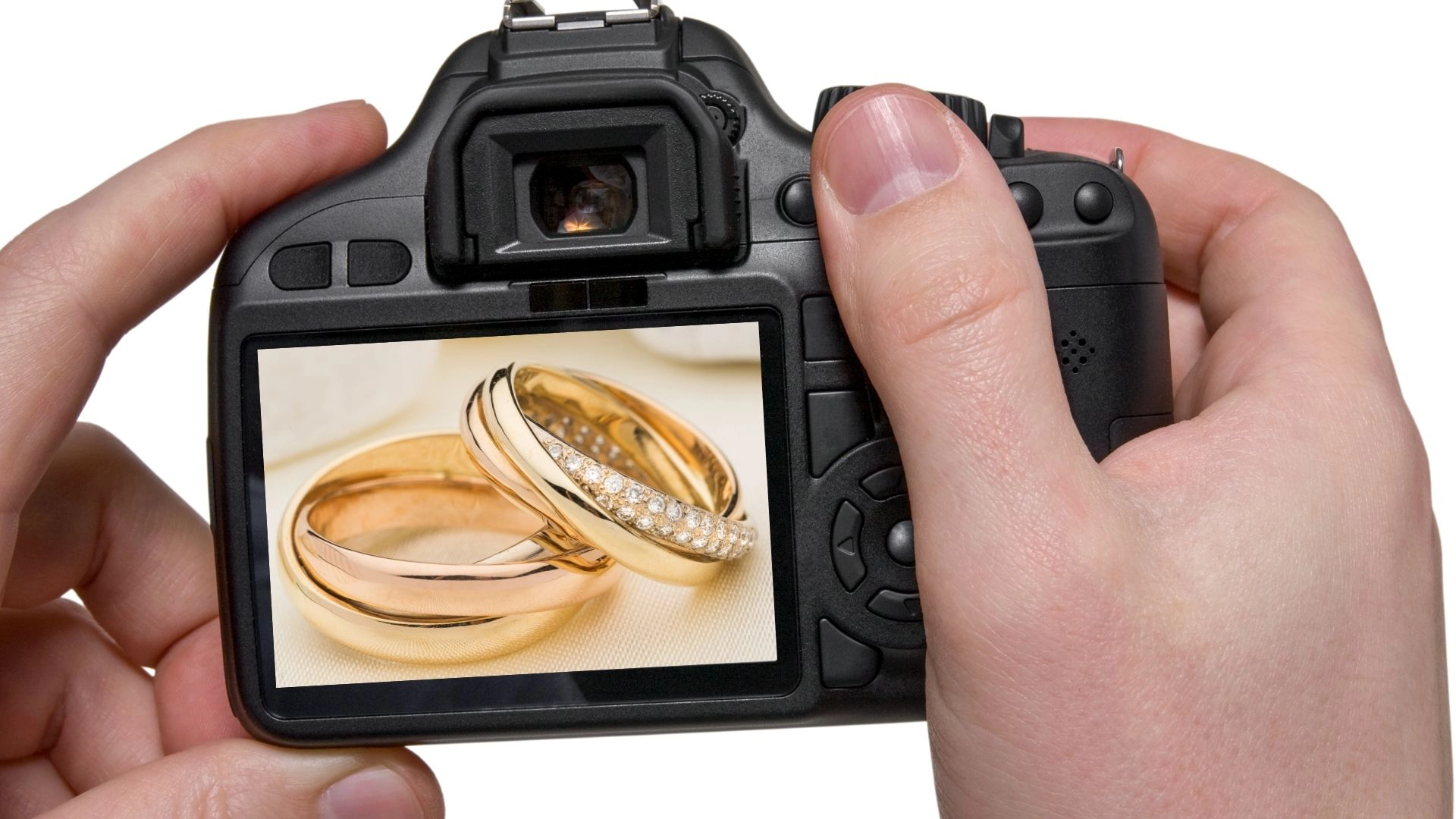
Choose the Best Camera for Close-up Photography
Canon EOS R5
The EOS R5 is a mirrorless camera with a full-frame sensor and 45 megapixels. It captures fine detail and texture exceptionally well, making it highly suitable for jewelry photography. This camera has a very advanced autofocus system called Dual Pixel CMOS AF II, which covers a wide area. It also features 5-axis in-body image stabilization (IBIS), which helps produce sharp images even at slower shutter speeds.
Nikon D850
People know that the Nikon D850 has a high resolution and great image quality. The full-frame sensor with 45 megapixels gives you amazing detail and sharpness. You can take very detailed pictures with this camera, and it works well in a wide range of shooting situations. Its 5-axis stabilization system helps keep the shutter from shaking, which makes sure that the pictures are clear. You can take an image at up to 20 frames per second with the electronic shutter. The camera’s autofocus, which is based on deep learning, can also recognize subjects and keep the focus right.
Fujifilm X-T4
People know the Fujifilm X-T4 for its great image quality and ability to do a lot of different things. The 26.1-megapixel APS-C X-Trans CMOS 4 sensor takes sharp, detailed pictures that are great for close-up and product photography. The camera has a 5-axis in-body image stabilization (IBIS) system that keeps the camera from shaking. It can take pictures of things that move quickly at a rate of up to 15 frames per second. The advanced autofocus system with phase-detection points also makes sure that small, shiny things like jewelry are always in focus.
Sony A7R series
The full-frame sensors in the Sony A7R series have very high resolution. The A7R cameras have great color accuracy and dynamic range. Their autofocus systems are quick and advanced, which helps them keep sharp focus even on small things. The series is great for professional product photography because it has a full-frame sensor and a high resolution.
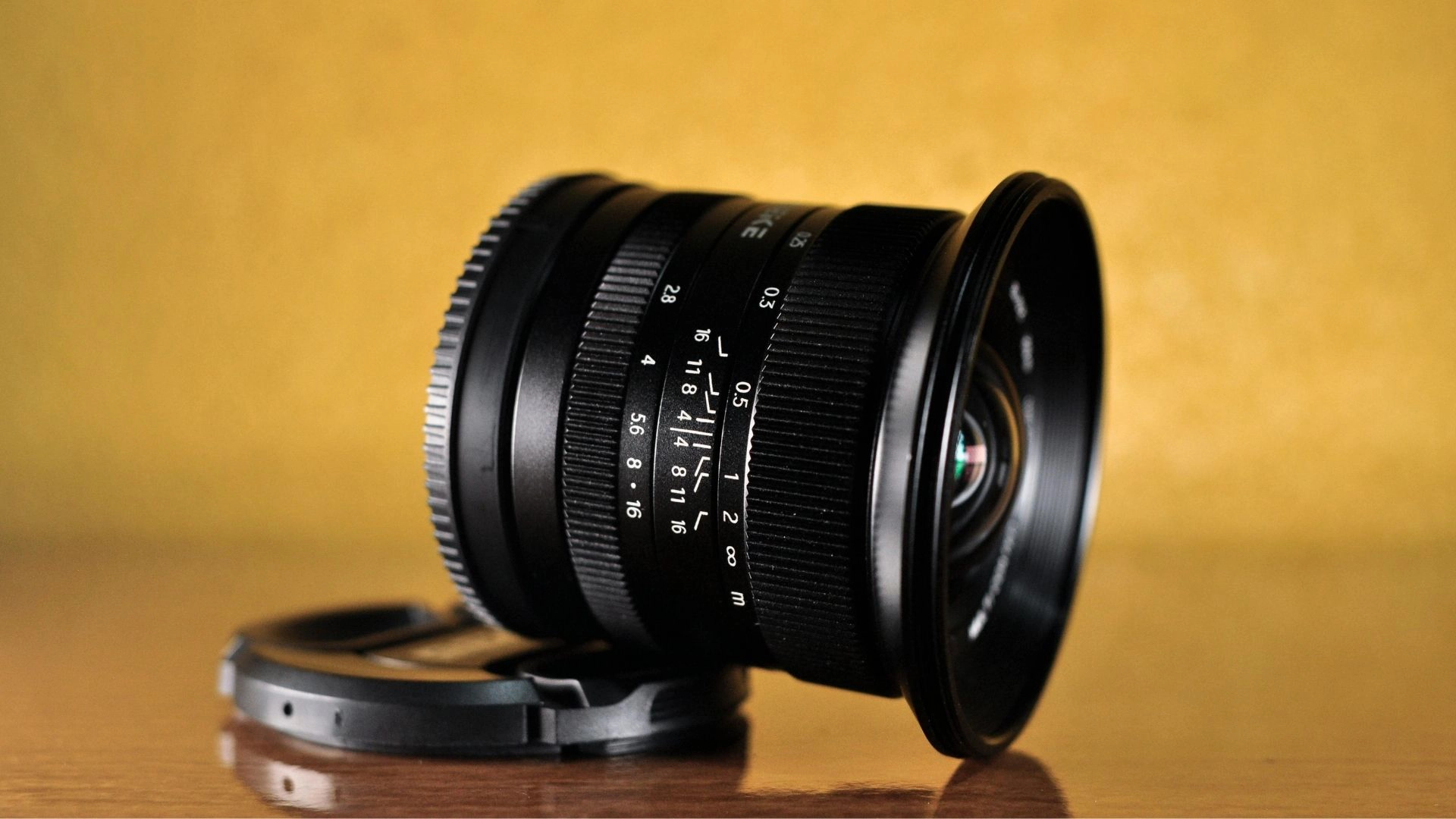
Key Features of a Macro Lens for Close-Up Photography
Magnification Ratio
In photography, the magnification ratio refers to how large the subject appears on the camera sensor compared to its actual size. A 1:1 magnification ratio means the subject is captured life-size on the sensor. For example, a 1 cm gemstone will appear as 1 cm on the camera sensor. A higher magnification (like 2:1) means the subject is projected at twice its actual size on the sensor.
Focal Length
A macro lens with a focal length of 100–105mm is ideal for close-up jewelry photography. The lens should offer 1:1 macro capability, a wide aperture (like f/2.8) for shallow depth of field, and excellent sharpness. You need to use a sturdy tripod is essential to eliminate camera shake in macro shots.
Minimum Focus Distance
Maintaining distance is an important aspect of close-up jewelry photography. To capture the fine details and textures of small subjects, a photographer needs to maintain the minimum focus distance (MFD). Macro lenses typically provide a 1:1 reproduction ratio, and their minimum focus distance usually ranges from 15 cm to 30 cm.
Maximum Aperture
A large maximum aperture allows more light into the lens. It is especially helpful in low-light conditions or a shallow depth of field. A wide aperture (like f/2.8) helps isolate the subject and emphasizes the jewelry’s details. It also allows for faster shutter speeds, reducing motion blur and helping maintain sharp images
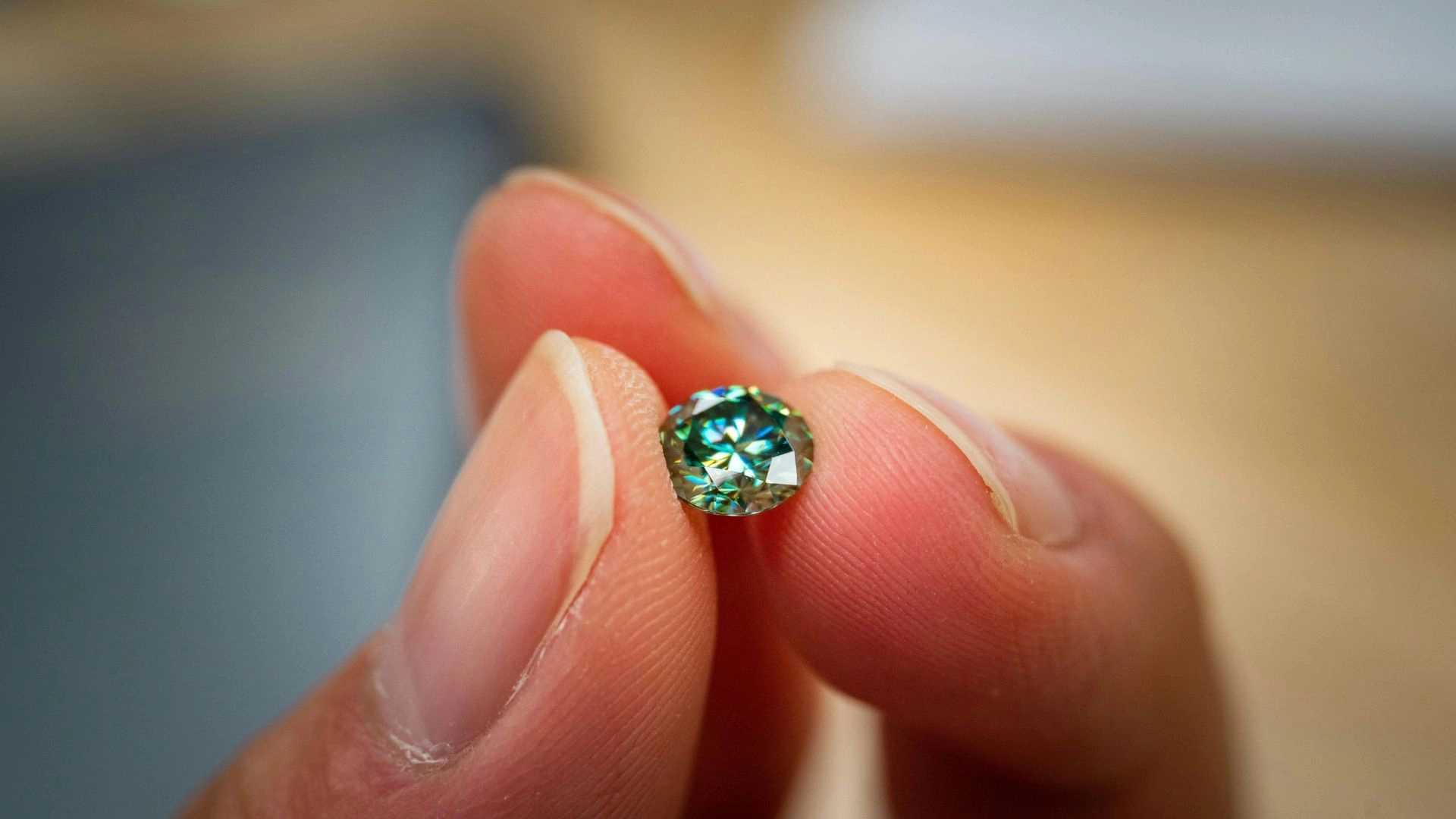
Techniques for Close-Up Jewelry Photography
You need to capture the intricate details and brilliance of each piece for close-up jewelry photography. Photographers can use a simple background, different angles, and poses to minimize reflections.
Background for Jewelry
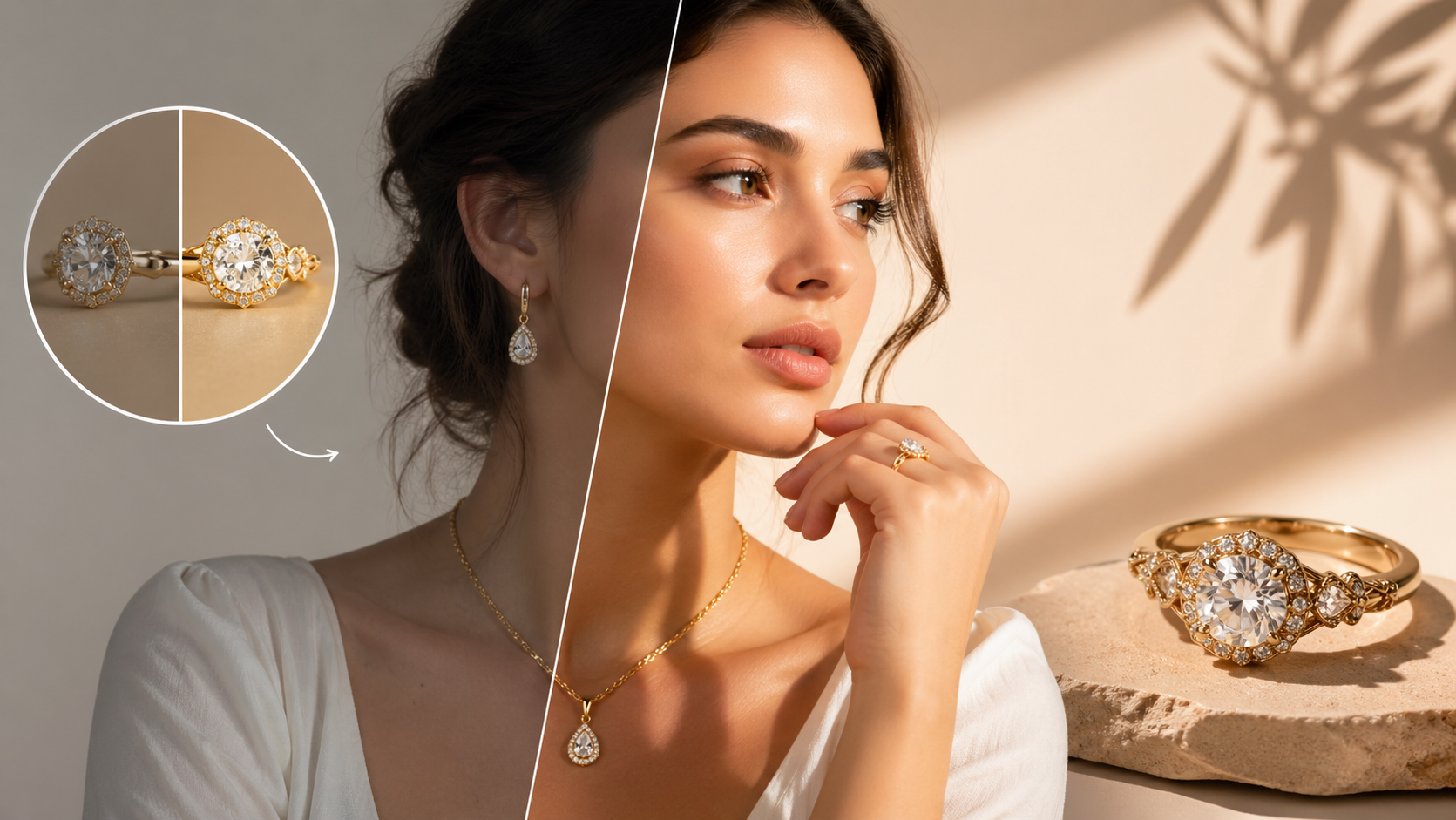
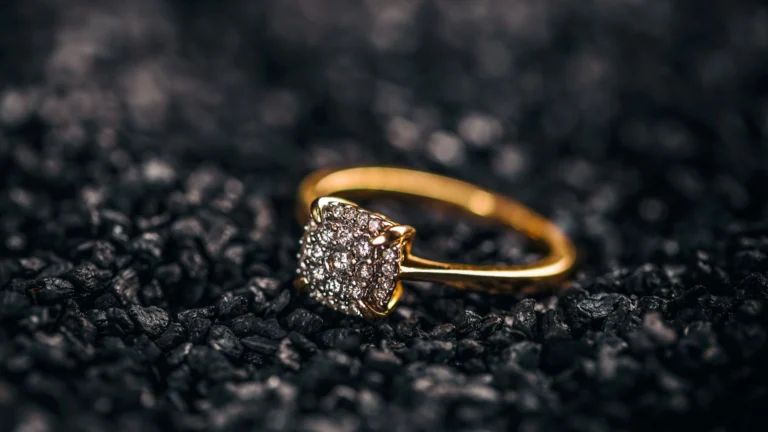
Simple and neutral backgrounds like white, black, or gray are perfect for close-up jewelry photography. A white background can create a clean look and highlight details of jewelry. Black background adds dramatic contrast, and gray offers a versatile, balanced option. Creative backgrounds like textured fabrics or reflective surfaces can add visual interest and contrast. Contextual and lifestyle backgrounds, including showing jewelry on a model or using minimal props.
Jewelry Photography Angles
Different angles are essential to showcase the depth, detail, and sparkle of close-up jewelry photography. A 45-degree angle captures both height and surface details for layered items such as necklaces and earrings. Top-down (90-degree) angles provide a flat, clear view of designs, perfect for rings and brooches. Profile or side angles highlight the thickness and craftsmanship of jewelry. A face-on angle works well for necklaces, displaying the full chain and pendant clearly.
Poses to Minimize Reflections
Minimizing reflections requires careful control of light, camera angles, and jewelry positioning. Adjust the camera angle by moving it 30–45 degrees from reflective surfaces and shooting slightly. A tripod ensures stability for precise adjustments and sharp focus. Reflection can be controlled using posing and arrangement techniques—such as rotating or tilting the jewelry, using a model, and keeping hand poses natural.
Lighting Setups for Macro Jewelry Photography
Soft, diffused lighting is essential to prevent harsh reflections in close-up jewelry photography. There are some common setups, including one, two, and three light setups. A photographer follows key techniques for a perfect lighting setup.
- You can use Softboxes, diffusion tents, or simple diffusion sheets. It helps you to minimize glare on reflective surfaces.
- A photographer needs to avoid direct light on the jewelry. You can use reflectors to bounce light into shadowed areas and manage the surroundings.
- Set your camera to match the light source for accurate, true-to-life colors. Experiment with 45-degree angles from the side and overhead to highlight the jewelry’s texture and depth.
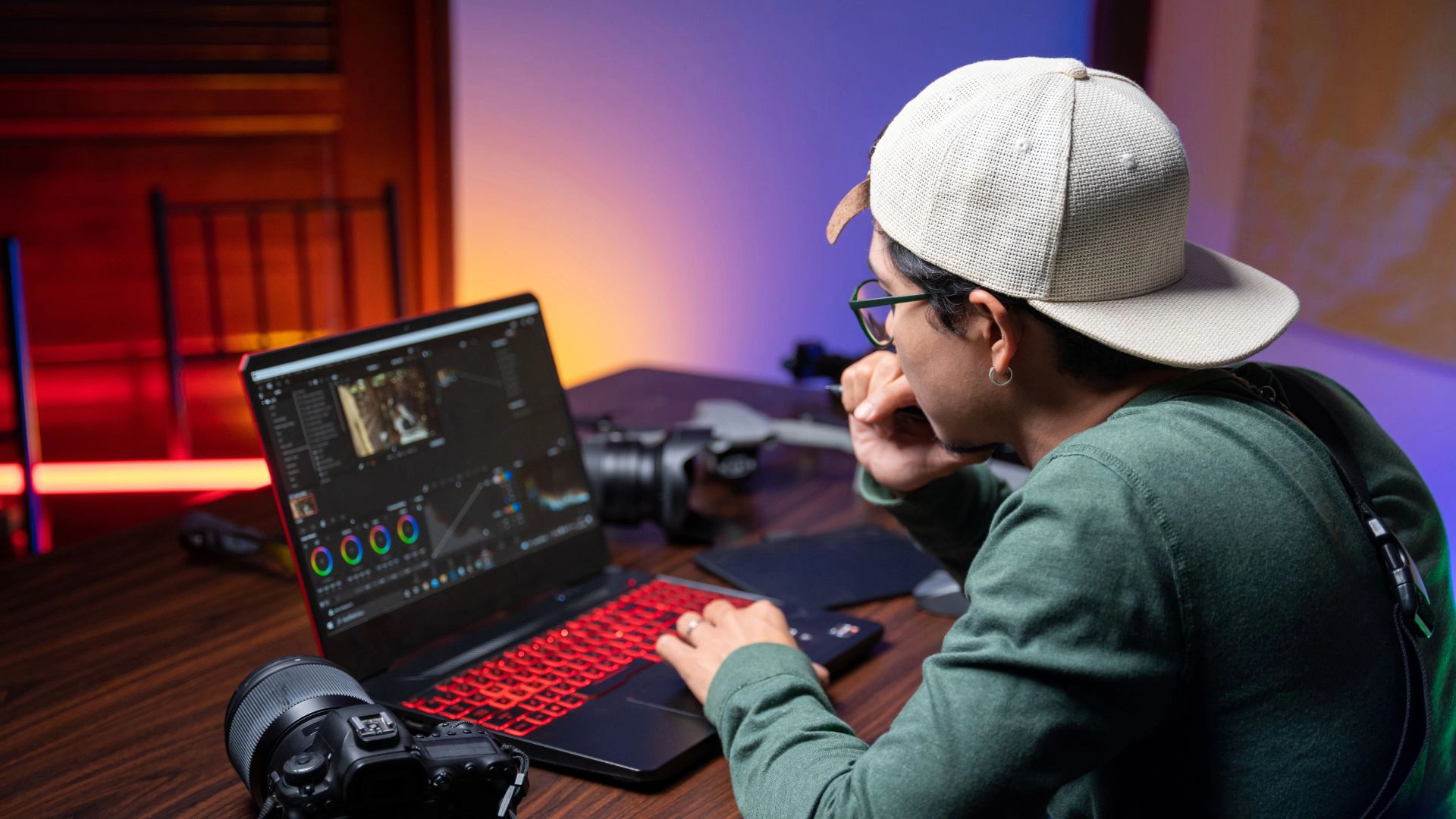
Post-Processing for Close-Up Jewelry Photo
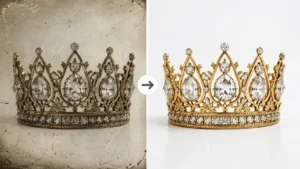
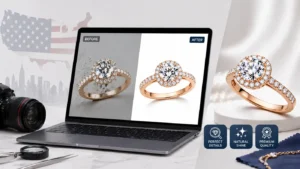
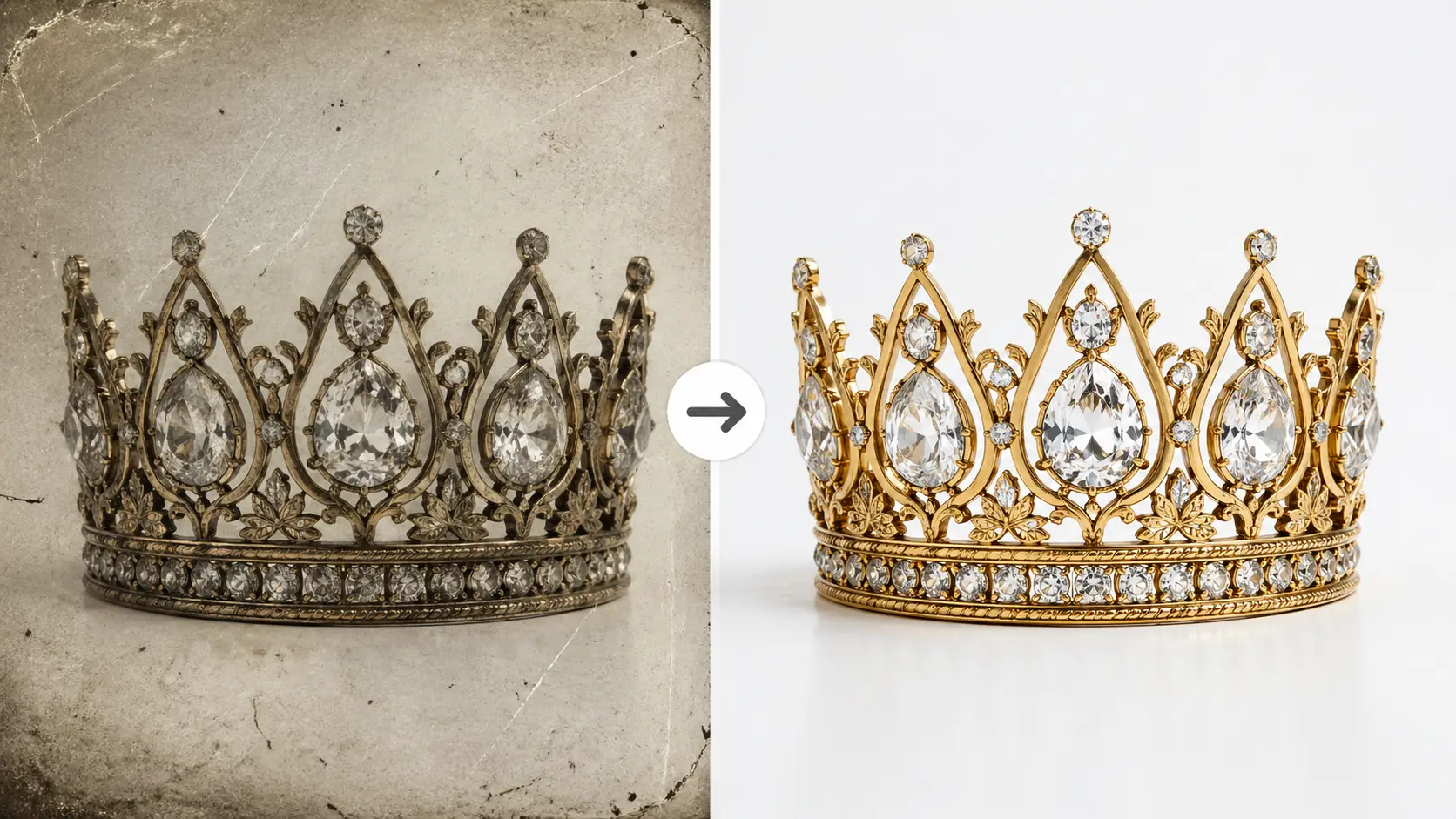
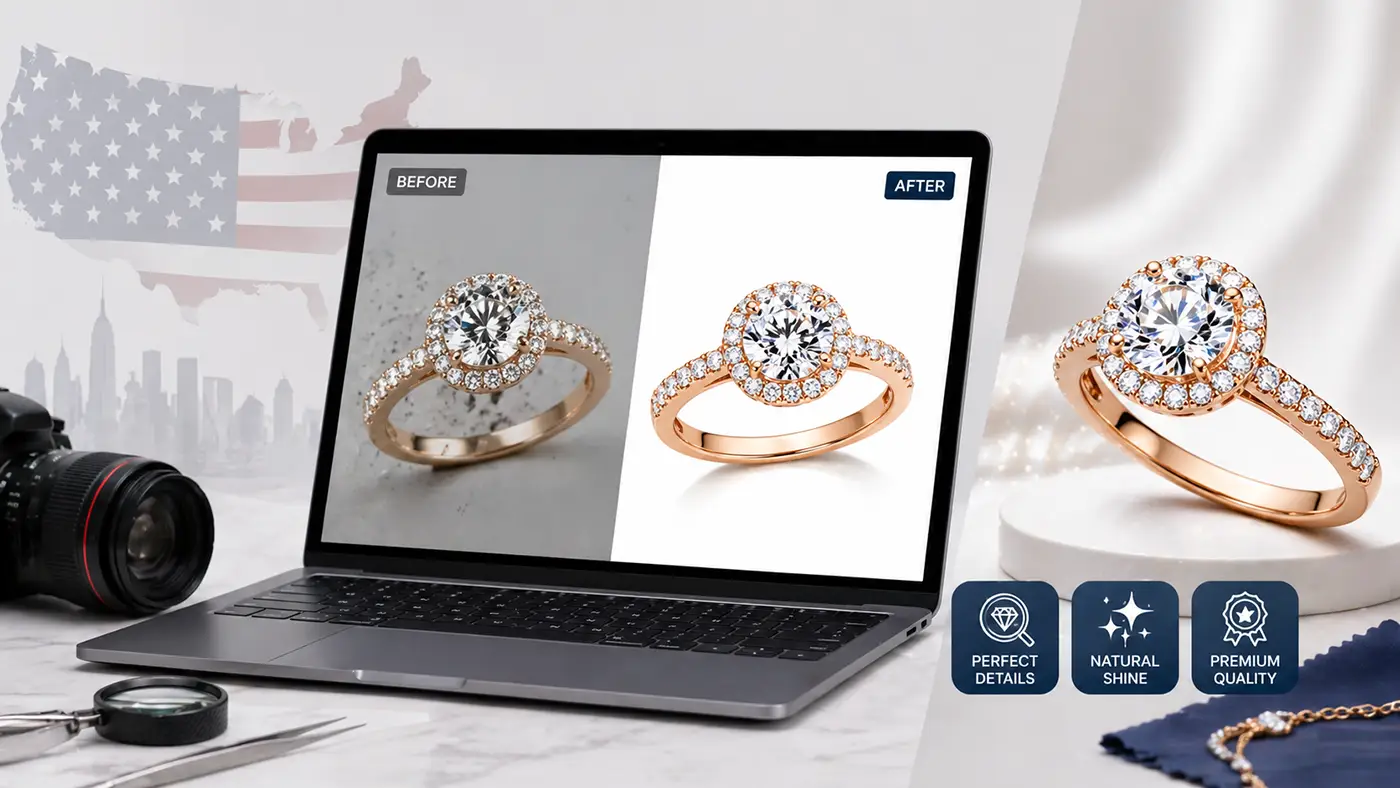
Post-processing in close-up jewelry photography is essential to clean imperfections and enhance the overall image. Key services of jewelry retouching include dust and scratch removal, background cleanup, color adjustments, and refining reflections.
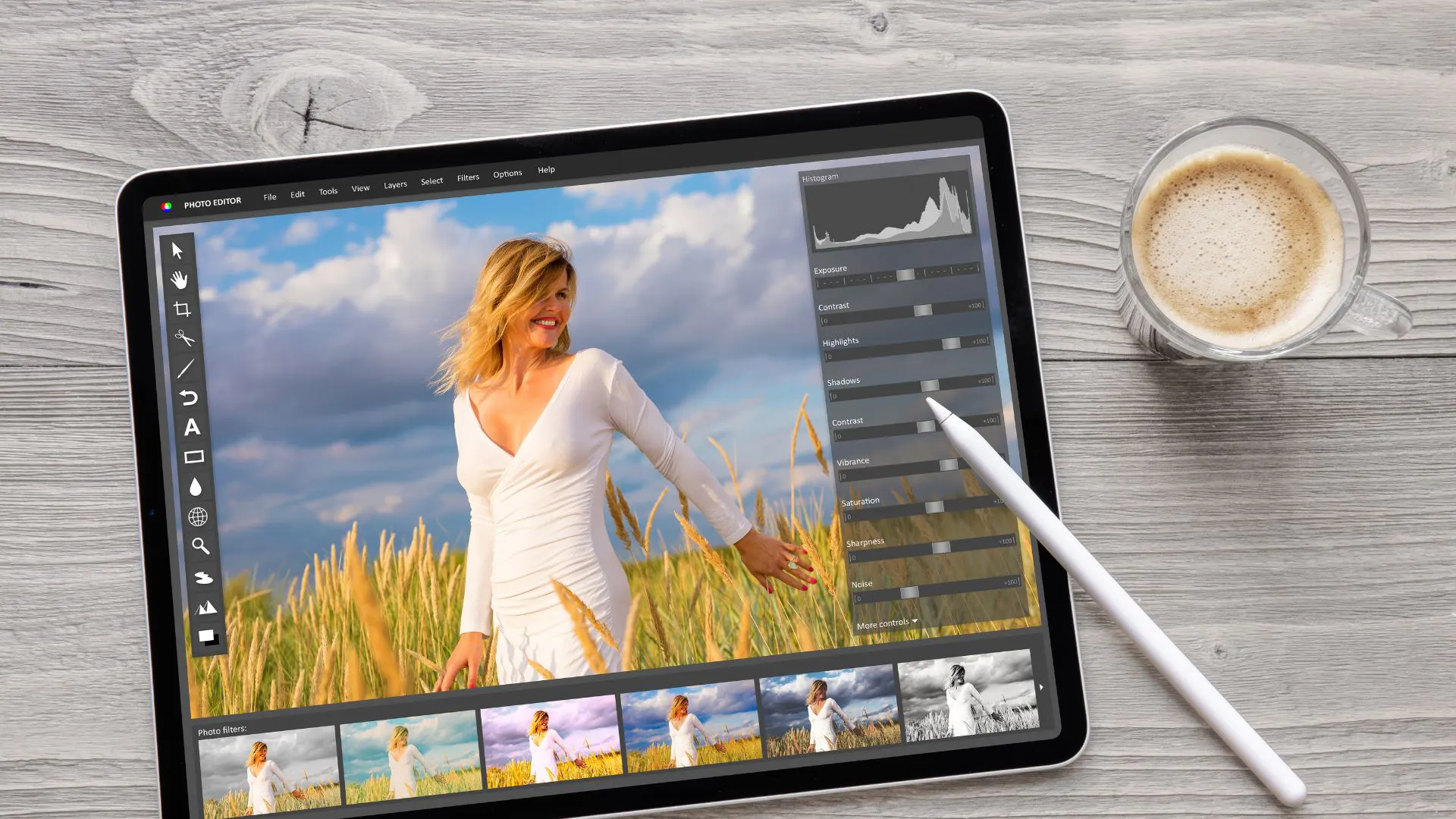
- Eliminate dust, fingerprints, and micro-scratches using software like Photoshop or Lightroom.
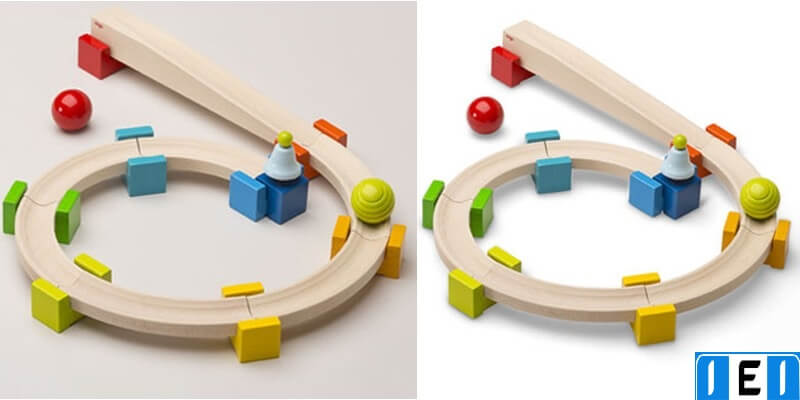
- Isolate jewelry from messy or distracting backgrounds and replace them with clean, neutral colors.
- Boost the sparkle and dimension of gems subtly to make the jewelry stand out.
- Correct white balance, enhance colors, and balance brightness and contrast for vibrant, true-to-life results.
- Soften or remove harsh reflections while preserving the polished look of the jewelry.
Conclusion:
Mastering close-up jewelry photography combines technical skill, creativity, and attention to detail. You should select the right camera and macro lens to control lighting, angles, and reflection. Photographers can enhance every detail, creating professional, striking images with careful post-processing service.