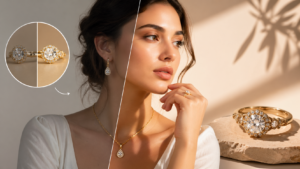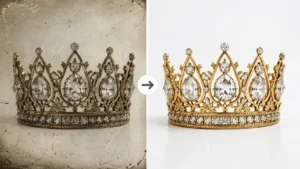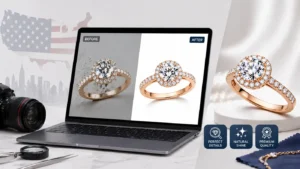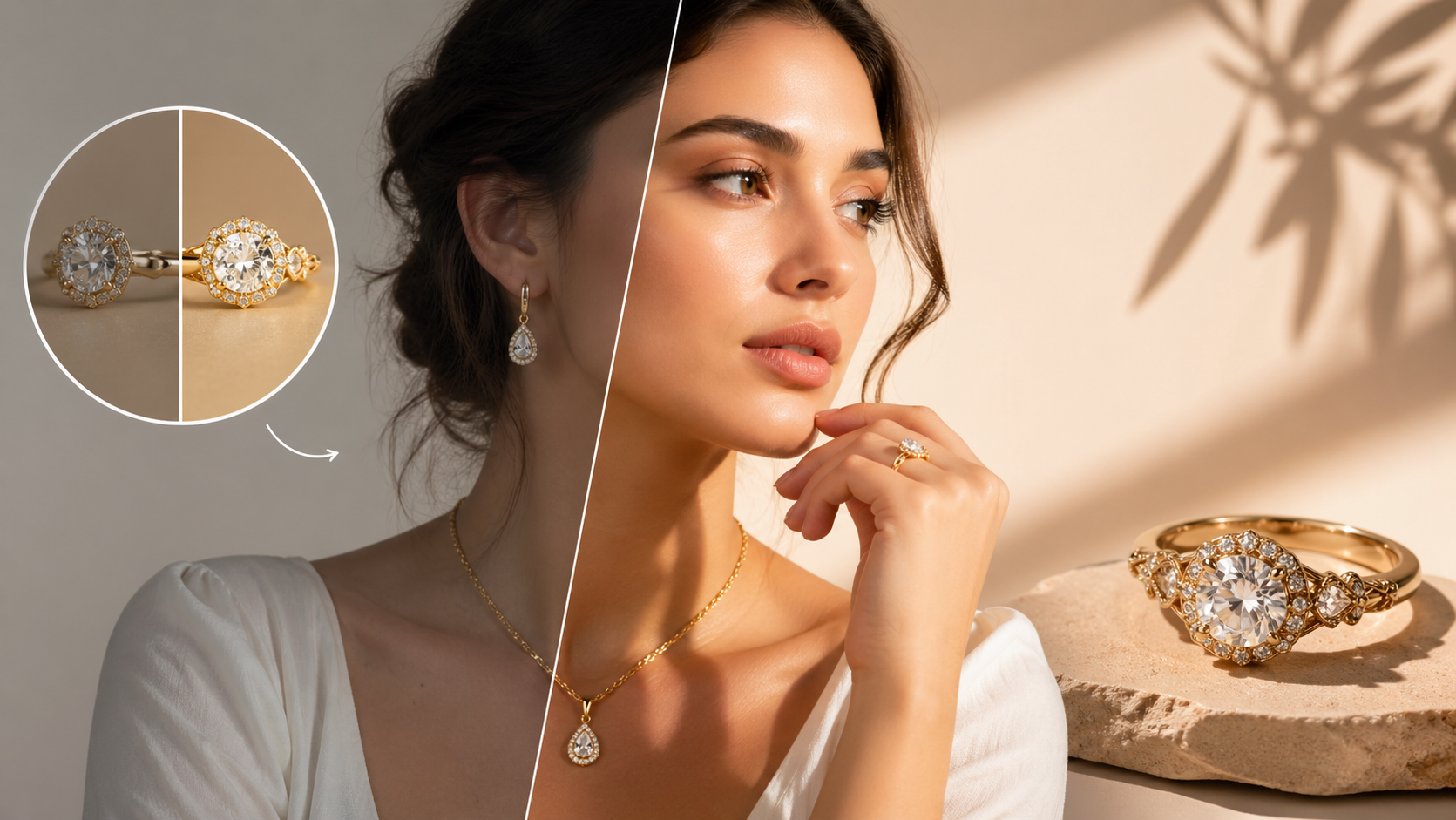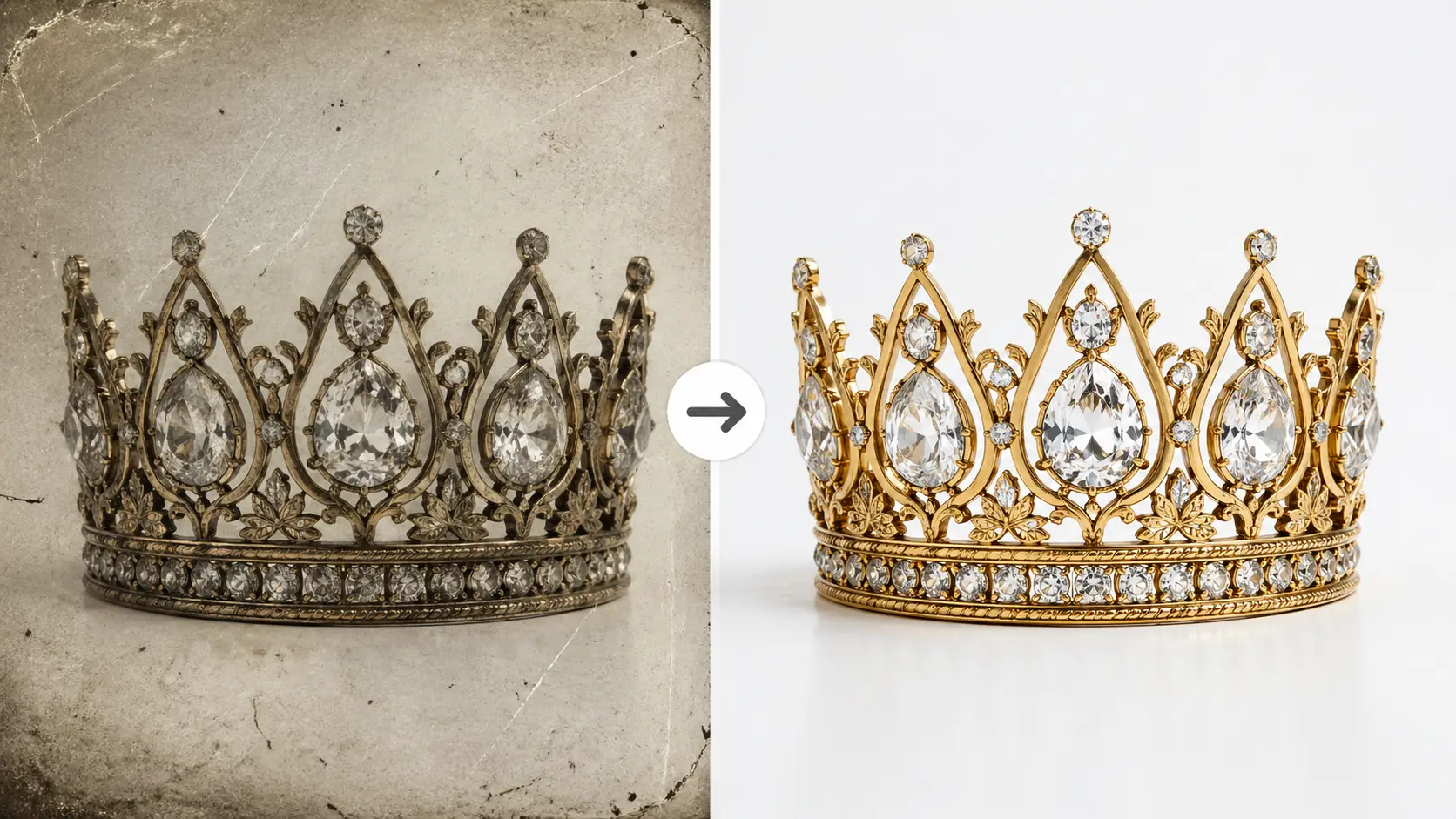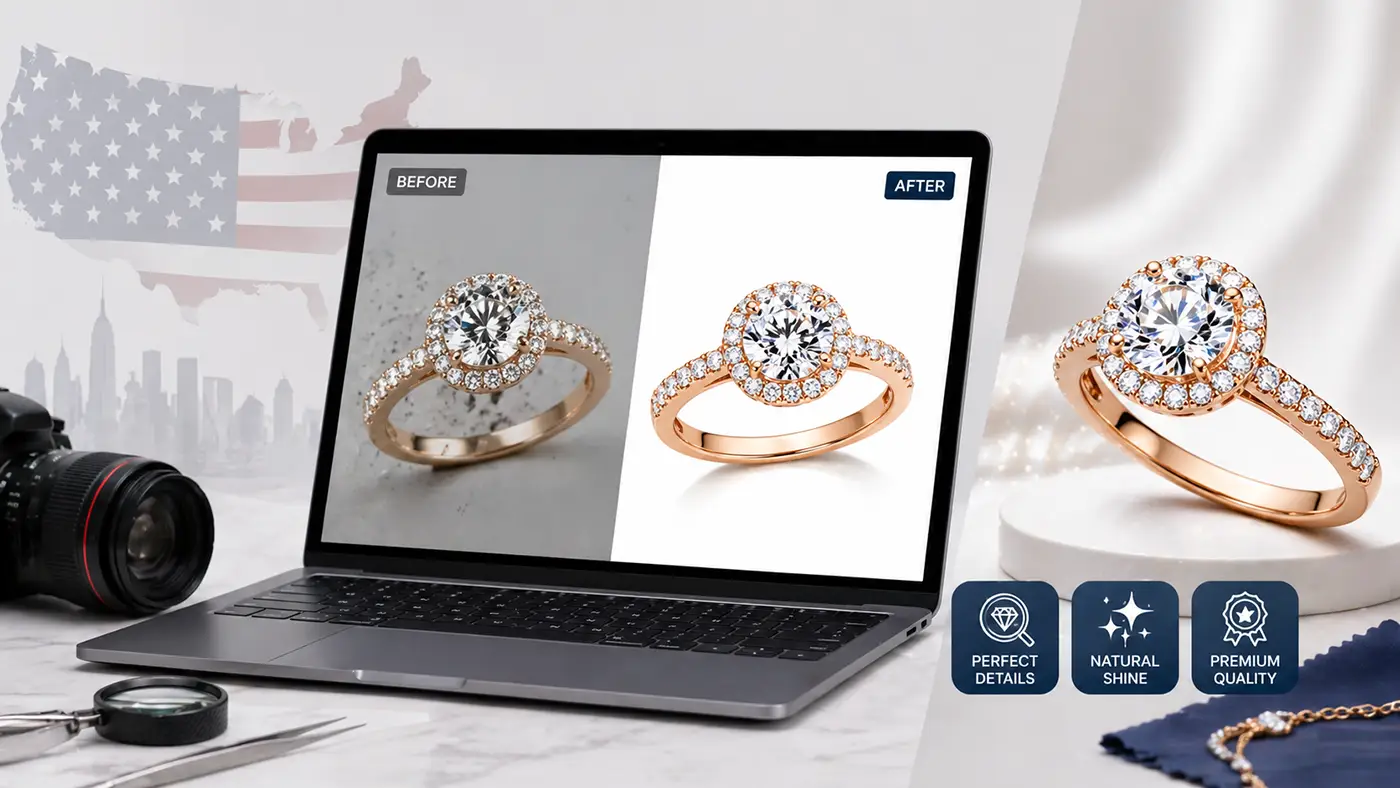
Jewelry photography plays a crucial role in showcasing the elegance, craftsmanship, and brilliance of every piece. High-quality jewelry can appear flat, dull, or imperfect in photographs due to lighting, reflections, or small dust particles. Jewelry retouching carefully cleans imperfections, refines backgrounds, corrects colors, enhances shine, and adds depth. Professional jewelry product photo retouching techniques create vibrant, realistic, and visually appealing photos for e-commerce, catalogs, and promotional materials.

Preparing the Image and Workspace in Photoshop
It’s essential to set up your Photoshop workspace efficiently before starting to edit. You can do this easily by either dragging the image file directly into the Photoshop window or by navigating to File > Open and selecting your photo from your computer.
Once your image is open, it’s important to safeguard the original file. Always work on duplicate layers rather than the background layer itself. To create a duplicate layer, select the background layer in the Layers Panel and press Ctrl + J (Windows) or Command + J (Mac). Photo retouching helps you make your jewelry images perfect for e-commerce platforms.
Turn on panels like Layers, Properties, and History so you can quickly reach the tools you need. Always work on duplicated layers instead of the original photo. Your editing stays non-destructive, and you can freely enhance the jewelry’s shine and details without risking the original image.
Remove Dust, Scratches, and Imperfections
Jewelry often has tiny imperfections like dust particles, scratches, or smudges that can distract from its brilliance in photos. The retoucher should start by zooming in closely on your image to carefully inspect every detail. Jewelry retouching helps to clean these flaws and makes it flawless for professional presentations.
Use the Spot Healing Brush Tool
The Spot Healing Brush Tool is great for quickly fixing small flaws. This tool copies pixels from the area around the flaw and blends them in, removing dust, scratches, or blemishes with a single click. Adjust the brush size so it slightly exceeds the flaw for a smoother result, and work gradually to maintain the jewelry’s natural texture.
Use the Clone Stamp Tool for Complex Issues
Some complex issues, like unwanted reflections, camera shadows, or deeper scratches, require a more controlled approach. The Clone Stamp Tool allows you to copy pixels from a clean part of the jewelry and paint over the problematic areas. To set your source, hold Alt (Windows) or Option (Mac) and click on a clean section. Then carefully brush over the imperfection, making sure to follow the contours and highlights of the jewelry so it blends naturally.
Refine the Jewelry and Background
After cleaning and enhancing the jewelry, the next step is to refine its edges and background for a polished, professional finish. This ensures the piece stands out and looks consistent across all product images. Depending on your project, you may want to keep the jewelry on a white background, add a subtle gradient, or place it on a custom backdrop. Make sure the background does not overpower the piece—its purpose is to highlight the jewelry’s shine and details. Soft, clean backgrounds usually work best for professional presentations
Clipping Path
To isolate the jewelry from its background, use the Pen Tool to create a precise clipping path around the edges. This gives you full control over the shape and allows you to remove or replace the background cleanly. Once the path is complete, convert it into a selection and create a mask. This technique is especially useful for e-commerce, where jewelry often needs to be displayed on a pure white or transparent background.
Correct Colors
Jewelry photography often suffers from lighting issues that affect gemstone hues or metal tones. To fix this, use adjustment layers such as Hue/Saturation, Levels, or Curves. Correct any unwanted color casts, restore the true shade of the gemstones, and ensure that metals like gold, silver, or platinum appear natural. The goal is to make the jewelry look realistic and appealing on the e-commerce platform.
Enhancing the Shine and Sparkle of Jewelry
Jewelry often loses its natural shine and sparkle in photographs because lighting, camera settings, or reflections can make it appear flat or dull. Photoshop provides several tools to bring out that luxury shine and depth. Enhancing shine and sparkle is essential because it draws attention, showcases the craftsmanship, and gives your product a professional, high-quality appearance. Jewelry retouching adds depth, makes reflections and facets of gemstones more visible, and emphasizes the polished surfaces of metals.
Start by creating a new layer above your jewelry photo and set the blend mode to Color Dodge. Select a soft brush, use a light gray tone, and gently paint over gemstone facets or reflective metal areas. This technique boosts the highlights, adding a glowing sparkle and natural glow.
The Dodge Tool brightens highlights, enhances reflections, and adds depth and realism to your jewelry. This makes gemstones appear more vivid and metals look polished. Then, switch to the Burn Tool to deepen shadows, bringing out contrast and adding dimension to the piece. Always keep the exposure/opacity low (5–15%), so your adjustments are subtle and blend smoothly. The combination of lightening and darkening helps the jewelry look three-dimensional and dynamic.
Once the shine and depth are in place, refine the overall clarity with Filter > Sharpen > Unsharp Mask. Adjust the amount to control intensity and the radius to define how far the sharpening spreads across edges. This ensures every detail, from gemstone cuts to fine engravings, looks crisp and professional.
Adjust Contrast and Lighting
Lighting and contrast are what give jewelry photos their visual punch. Proper adjustments can make gemstones sparkle, metals shine, and the overall image appear more vibrant and professional.
Start by creating a brightness/contrast adjustment layer. Instead of simply brightening the image—which can sometimes wash out details—try slightly increasing the contrast. Higher contrast enhances the difference between light and dark areas, making diamonds shimmer and metals appear more defined. Apply subtle changes until the jewelry feels vibrant without losing its natural texture.
Add a Natural Shadow
Adding a natural shadow to your jewelry photos makes the pieces appear more realistic and three-dimensional. A well-placed shadow adds depth, helps define the shape, and enhances the overall professionalism of the image. There are various types of shadows, like soft drop shadows and reflection shadows. and natural shadow. This technique allows you to add different types of shadows to a jewelry photo.
- Select your jewelry layer in the Layers Panel and press Ctrl + J (Windows) / Command + J (Mac). Drag this new layer beneath the original to keep your workflow organized.
- With the lower layer selected, go to Edit > Transform > Flip Vertical. This will invert the jewelry, creating the foundation for a reflection or shadow effect.
- Move the flipped layer downward until it aligns naturally beneath the jewelry. Adjust the angle or perspective slightly if needed to match the light source and surface.
- Apply Filter > Blur > Gaussian Blur to soften the edges of the shadow. The blur amount depends on the surface type—sharper for glossy surfaces and softer for matte backgrounds.
Conclusion
Professional jewelry retouching transforms ordinary photos into stunning and high-quality images. High-end jewelry retouching can create realistic, vibrant, and visually compelling jewelry images for online stores and social media. A retoucher carefully prepares the workspace, removes imperfections, and refines edges and backgrounds. Jewelry photo editing involves correcting colors, enhancing sparkle, and adjusting lighting and shadows.