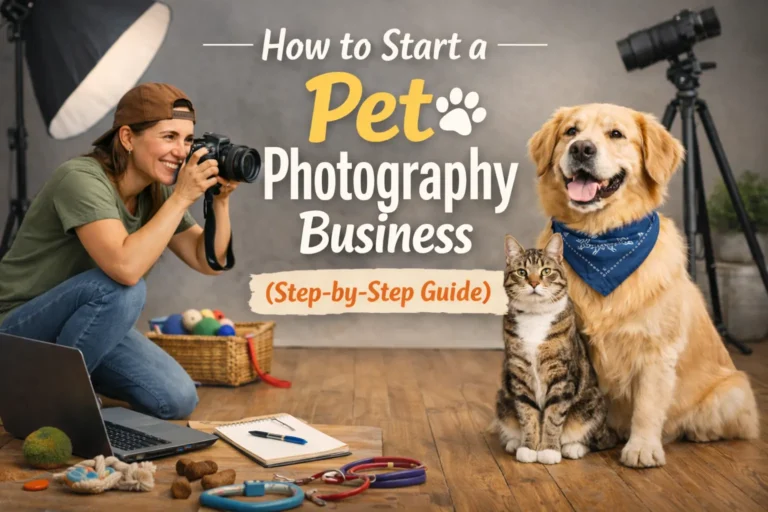
Pet photography is growing as more people treat their pets like family. Starting a pet photography business can turn your passion into a steady income. In this step-by-step guide, you will learn how to plan, price, market, and grow your pet photography business the right way.
Why Start a Pet Photography Business?
The pet industry has grown rapidly in recent years. Many pet owners now spend more on grooming, food, and photos. This growth creates strong opportunities for a pet photography business. As people treat pets like family, the demand for quality images continues to rise.
Professional pet photography is no longer just a luxury. Owners want high-quality portraits for social media, home decor, and special events. Clear and well-edited images help capture a pet’s personality. This steady demand makes professional pet photography a promising niche.
Income potential is another strong reason to start. With proper pricing and packages, you can build a steady stream of clients. Many photographers offer session fees, print products, and digital collections. A well-planned pet photography business can grow into a stable and rewarding career.
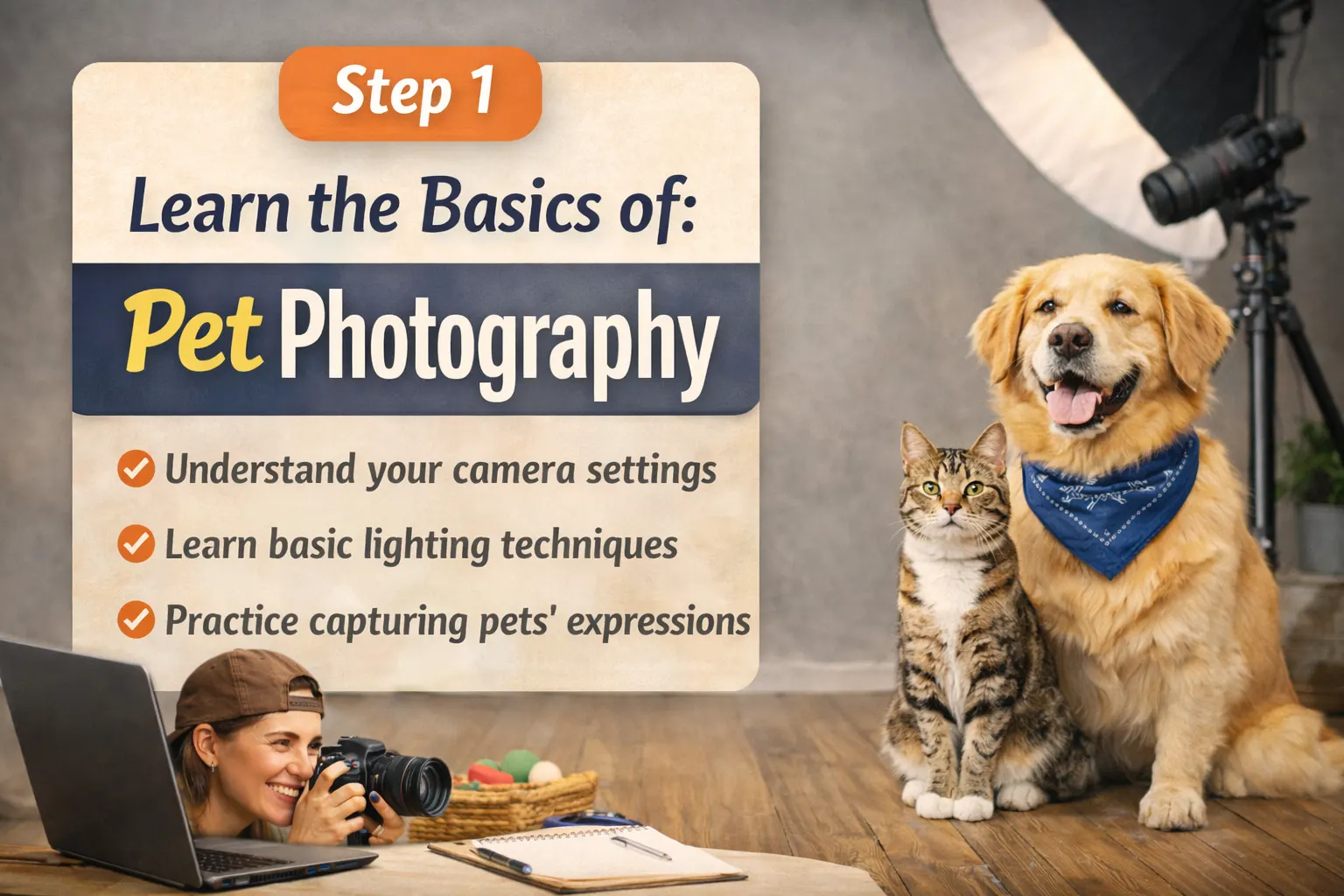
Step 1 – Learn the Basics of Pet Photography
Before starting a pet photography business, you need strong basic skills. Good photos build trust and attract clients. Learning simple techniques will help you create clean and professional images. These foundations make it easier to grow later.
Essential Pet Photography Equipment
You do not need the most expensive gear to begin. However, having the right pet photography equipment makes a big difference. A DSLR or mirrorless camera with a fast lens works well for sharp results. Natural light is often enough, but reflectors and simple lights can improve indoor sessions.
Comfort and safety tools are also important. Treats, toys, and soft mats help pets stay relaxed during shoots. Choosing practical equipment helps you focus on creativity instead of technical problems.
Camera Settings for Pet Photography
Understanding camera settings is key to capturing clear images. Use a fast shutter speed to freeze movement, especially for active dogs. A wide aperture helps blur the background and keep the subject sharp.
ISO should stay balanced to avoid noise. Good pet photography tips often suggest shooting in natural light for better color and detail. Practice different settings to see what works best in various situations.
Building a Strong Portfolio
A strong portfolio shows your skills and style. Start by photographing friends’ or family members’ pets. Focus on variety, including close-up portraits and action shots.
Select only your best images for display. Quality matters more than quantity. A clean and consistent portfolio builds confidence in your pet photography business and attracts your first clients.

Step 2 – Create a Pet Photography Business Plan
A clear plan helps your pet photography business grow in the right direction. Without a plan, it becomes hard to manage pricing, services, and expenses. A simple pet photography business plan outlines your goals, target clients, and expected income. It also helps you stay focused and avoid common mistakes in the early stage.
Defining Your Target Market
Start by deciding who you want to serve. Some photographers focus on dog owners, while others work with all types of pets. You may target families, breeders, or pet brands.
Understanding your target market helps you shape your style and pricing. When you know your ideal client, it becomes easier to design offers that meet their needs.
Setting Up Your Services and Packages
Next, define the pet photography services you will offer. You can provide outdoor sessions, studio portraits, or event coverage. Clear service options make it easier for clients to choose.
Create simple packages with clear pricing and deliverables. Include session time, number of edited images, and optional prints. Structured packages make your pet photography business look organized and professional.
Understanding Startup Costs
Every business requires some initial investment. Pet photography startup cost may include camera gear, editing software, website setup, and marketing expenses. You may also need basic props or studio space.
List your expected costs and compare them with your planned pricing. A realistic budget helps you set fair rates and avoid financial stress. Careful planning increases your chances of building a stable and profitable business.
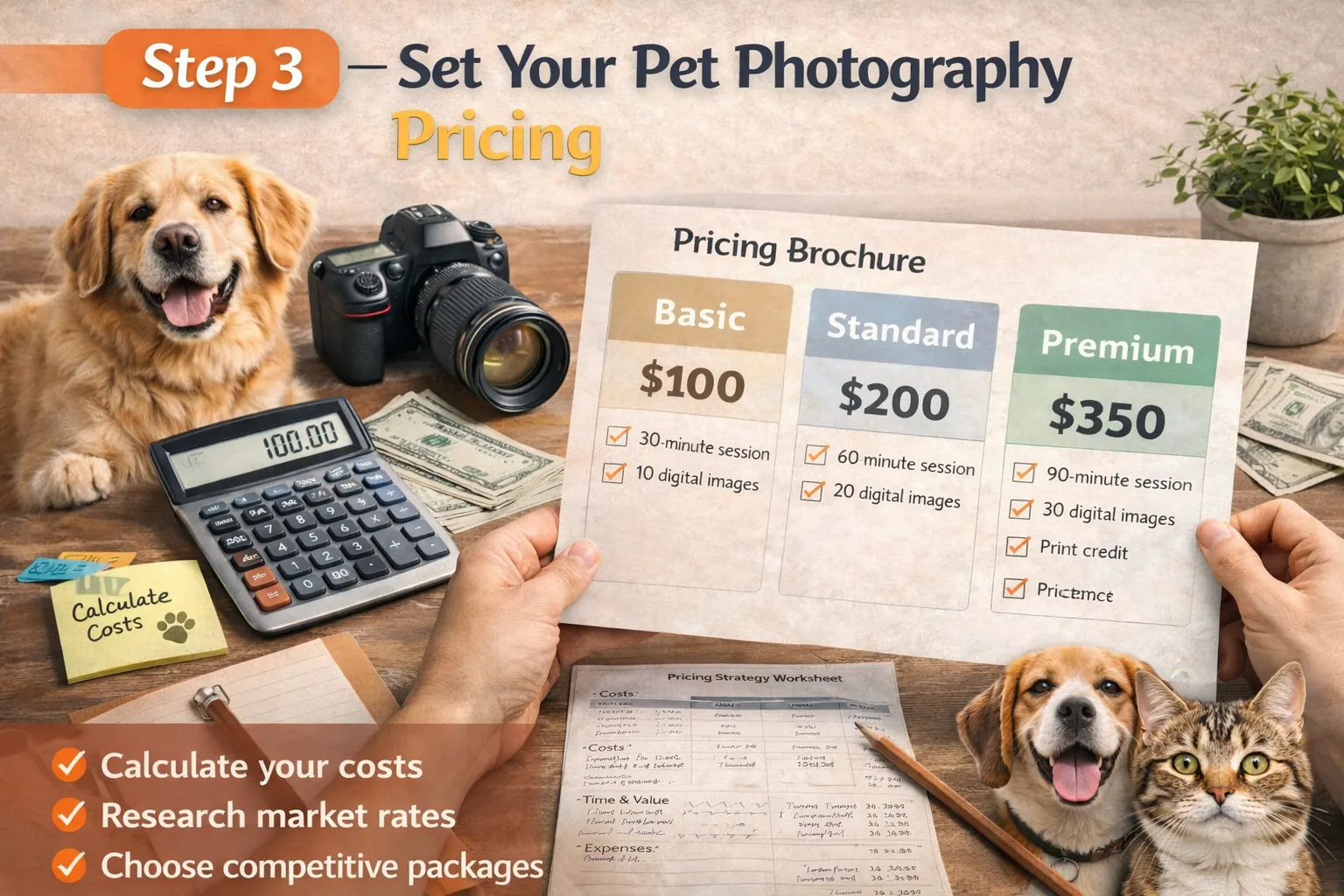
Step 3 – Set Your Pet Photography Pricing
Pricing is one of the most important parts of a pet photography business. If your rates are too low, you may struggle to cover costs. If they are too high without clear value, clients may hesitate. Smart pet photography pricing helps you stay profitable while remaining competitive.
Researching Competitor Pricing
Start by checking what other photographers charge in your area. Look at their websites and social media pages. Notice what is included in their session fees and packages.
Do not copy prices directly. Instead, understand the market range. This helps you set fair rates based on your skill level and services.
Creating Profitable Packages
Clear and simple pet photography packages make decisions easier for clients. Offer different options, such as basic, standard, and premium packages. Each package should clearly explain what the client receives.
Include session time, number of edited images, and any print products. Make sure your pricing covers your time, editing work, and business costs. Well-structured packages help your pet photography business grow steadily.
How Much Do Pet Photographers Make?
Income depends on location, experience, and pricing strategy. Some beginners earn part-time income, while experienced photographers build full-time careers.
Earnings increase when you improve skills, raise rates carefully, and attract repeat clients. Strong pet photography pricing and consistent service quality can lead to stable and growing income over time.

Step 4 – Register and Set Up Your Business
Once you plan your services and pricing, it is time to make your pet photography business official. Proper registration builds trust and protects your work. A legal setup also helps you manage payments, taxes, and contracts more smoothly. Taking this step early can prevent problems later.
Business Registration Basics
Start by choosing a business name that reflects your style and niche. Then check local rules to register your business legally. In many places, you may need a trade license or simple business registration.
Open a separate bank account for your business income and expenses. This keeps your finances organized. A clear structure makes your pet photography business look more professional and reliable.
Contracts and Legal Considerations
A written contract protects both you and your client. It should explain session details, payment terms, image usage rights, and cancellation rules. Many photographers use a pet photography contract template to save time and avoid mistakes.
Always review your contract carefully before sending it to clients. Clear agreements reduce confusion and build trust. Proper legal preparation helps your business run smoothly and safely.

Step 5 – Market Your Pet Photography Business
Marketing helps people learn about your pet photography business. Good photos alone are not enough if no one sees them. Simple and steady promotion can bring regular inquiries. Clear pet photography marketing builds trust and helps your business grow over time.
Building a Website and Portfolio
A website makes your business look serious and professional. It should show your best images, clear pricing, and easy contact details. Keep the layout clean and simple so visitors can find information quickly.
Your portfolio should include different types of sessions. Show close-up portraits and outdoor shots. Only use your strongest work. A clear portfolio helps turn visitors into pet photography clients.
Using Social Media for Pet Photography Marketing
Social media helps you reach more pet owners. Post your work regularly and keep captions short and clear. You can also share behind-the-scenes moments to build trust.
Use simple hashtags related to pet photography marketing. Reply to comments and messages quickly. Active communication helps attract more pet photography clients.
Finding Your First Clients
Getting your first clients may take patience. Start with friends, family, or local pet owners. You can offer a small discount to build your portfolio.
Ask happy clients for reviews and referrals. Positive feedback builds trust. With steady effort and quality work, your pet photography business will grow step by step.

Step 6 – Grow and Scale Your Business
Once your pet photography business becomes stable, the next goal is growth. Scaling does not mean rushing. It means improving your brand, services, and income step by step. With the right strategy, you can turn small success into long-term stability.
Building a Photography Brand
A strong brand helps people remember you. Your logo, editing style, and tone should stay consistent across all platforms. This makes your pet photography business look organized and professional.
Focus on clear messaging and a simple visual style. Share your story and values to connect with pet owners. A trusted brand attracts repeat pet photography clients and referrals.
Expanding to Studio or Outdoor Sessions
As demand grows, you can expand your session options. Some clients prefer outdoor shoots, while others want a clean studio look. Offering both can increase your reach.
If you plan to open a small pet photography studio, start with basic lighting and simple backdrops. Outdoor sessions require good timing and natural light. Expanding carefully helps you serve more clients without losing quality.
Offering Premium Services
Premium services can increase your income. You may offer larger print packages, albums, or wall art products. These upgrades add value without increasing session time.
Keep your pricing clear and simple. Premium pet photography packages should provide strong value and quality. When clients trust your work, they are more likely to invest in higher-tier services.
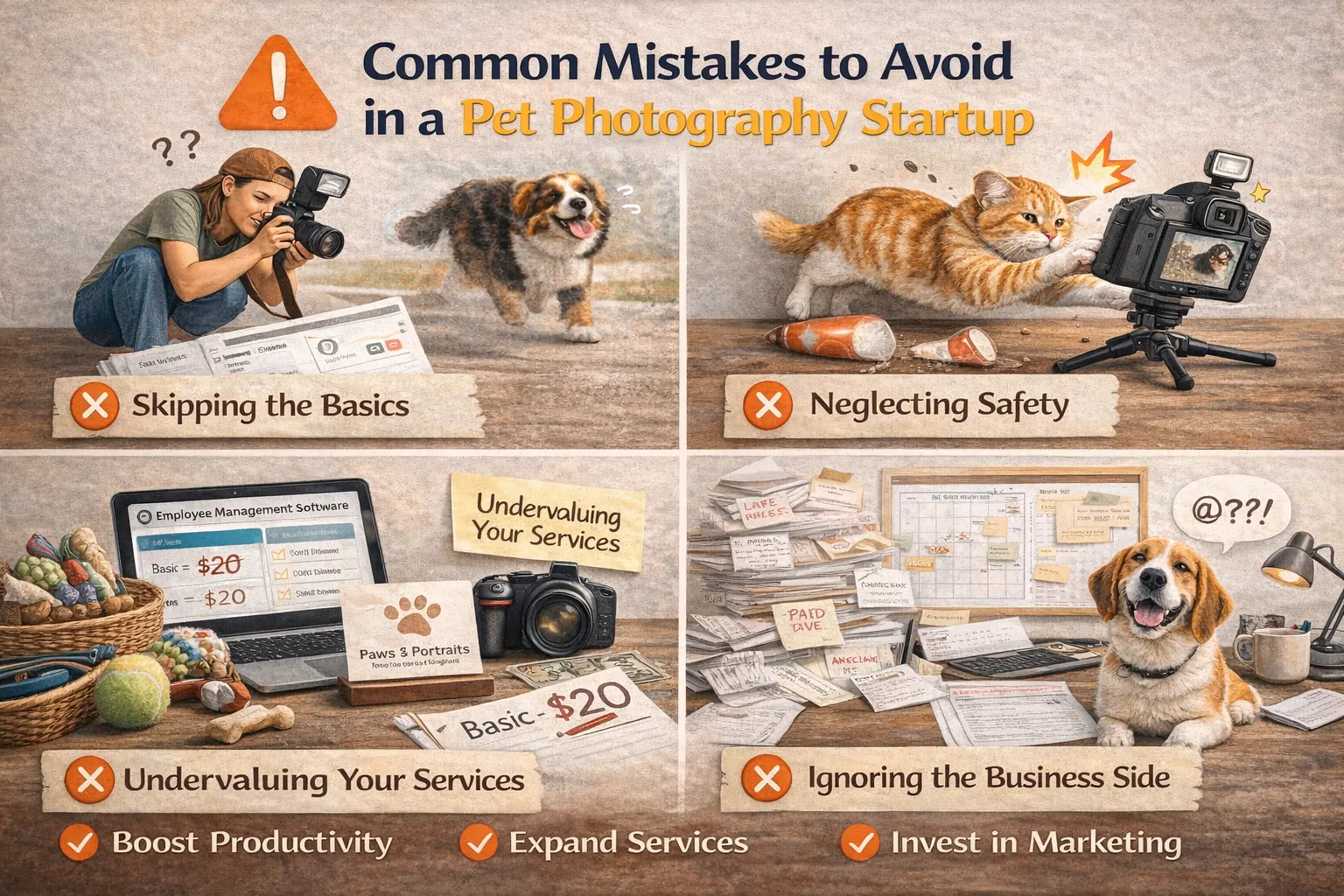
Common Mistakes to Avoid in a Pet Photography Startup
Starting a pet photography business is exciting, but small mistakes can slow your progress. Many beginners focus only on taking photos and forget the business side. A clear plan and steady effort help you avoid common problems. Learning from these mistakes early can save time and money.
One common mistake is underpricing your work. Low rates may attract clients at first, but they often lead to burnout. Your pet photography pricing should cover your time, editing, and business costs. Fair pricing supports long-term growth.
Another mistake is ignoring marketing. Even strong skills will not bring clients without proper promotion. Consistent pet photography marketing helps build visibility and trust. Regular posts, a clean website, and client reviews make a big difference.
Poor planning is also risky. Without a simple pet photography business plan, it becomes hard to manage income and expenses. Set clear goals and track your progress. Careful planning helps your startup grow in a stable and professional way.
Frequently Asked Questions (FAQs)
How much does it cost to start a pet photography business?
The cost depends on the equipment and setup you choose. Basic pet photography equipment, editing software, and a simple website are common startup expenses. Some people begin with gear they already own to reduce cost. Planning your pet photography startup cost early helps avoid financial stress.
Do I need a business license to start a pet photography business?
In many areas, you need basic business registration or a trade license. The rules depend on your location. It is important to check local laws before offering paid services. Proper registration makes your pet photography business more professional and trustworthy.
How do I get clients for my pet photography business?
Start by building a strong portfolio and sharing your work online. Social media and a simple website are useful tools for pet photography marketing. You can also partner with local pet shops or groomers. Good reviews help attract more pet photography clients.
What equipment do I need for a pet photography business?
You need a reliable camera, a fast lens, and basic lighting tools. Natural light works well for many sessions. Simple props and treats also help keep pets comfortable. The right pet photography equipment improves image quality and client experience.
Can pet photography become a full-time career?
Yes, it can grow into a full-time business with steady effort. Many photographers start part-time and expand as they gain clients. Strong pricing, clear marketing, and quality work increase income over time. A well-managed pet photography business can become stable and profitable.
Conclusion
Starting a pet photography business takes time and effort. With the right plan, you can turn your passion into income. Simple steps like building a portfolio, setting clear pricing, and marketing your work create a strong base.
Focus on quality and stay consistent. Keep learning new pet photography tips and improve your skills. Proper pet photo editing helps improve image quality and client satisfaction. Clear pet photography marketing will help you reach more clients and grow steadily.
Success does not come overnight. Start small and improve step by step. With patience and smart decisions, your pet photography business can become stable and profitable over time.