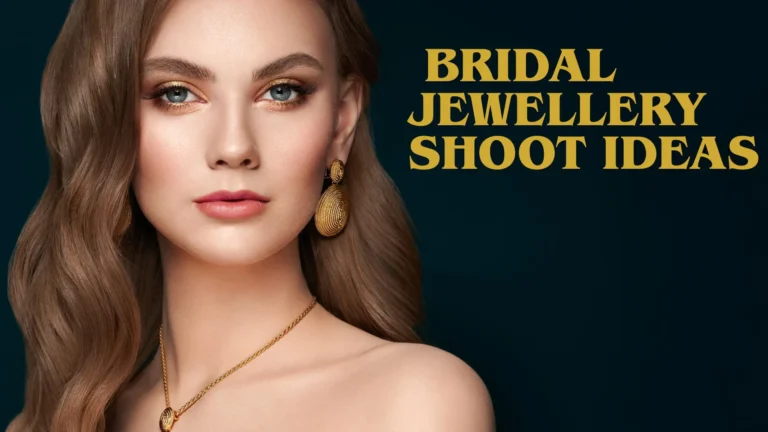
Bridal jewellery photography is an art to capture the sparkle, intricate details, shine, and beauty. Jewelry photography requires sharp, high-quality visuals in competitive markets like U.S. e-commerce platforms. Bridal jewellery shoot ideas can elevate your work and produce stunning results. Post-production helps photographers to create a final bridal jewelry image for their clients. These unique bridal jewellery shoot ideas cover everything from basic camera settings and lighting to advanced posing, styling, and post-processing tips.
Understanding the Basics of Bridal Jewelry Photography
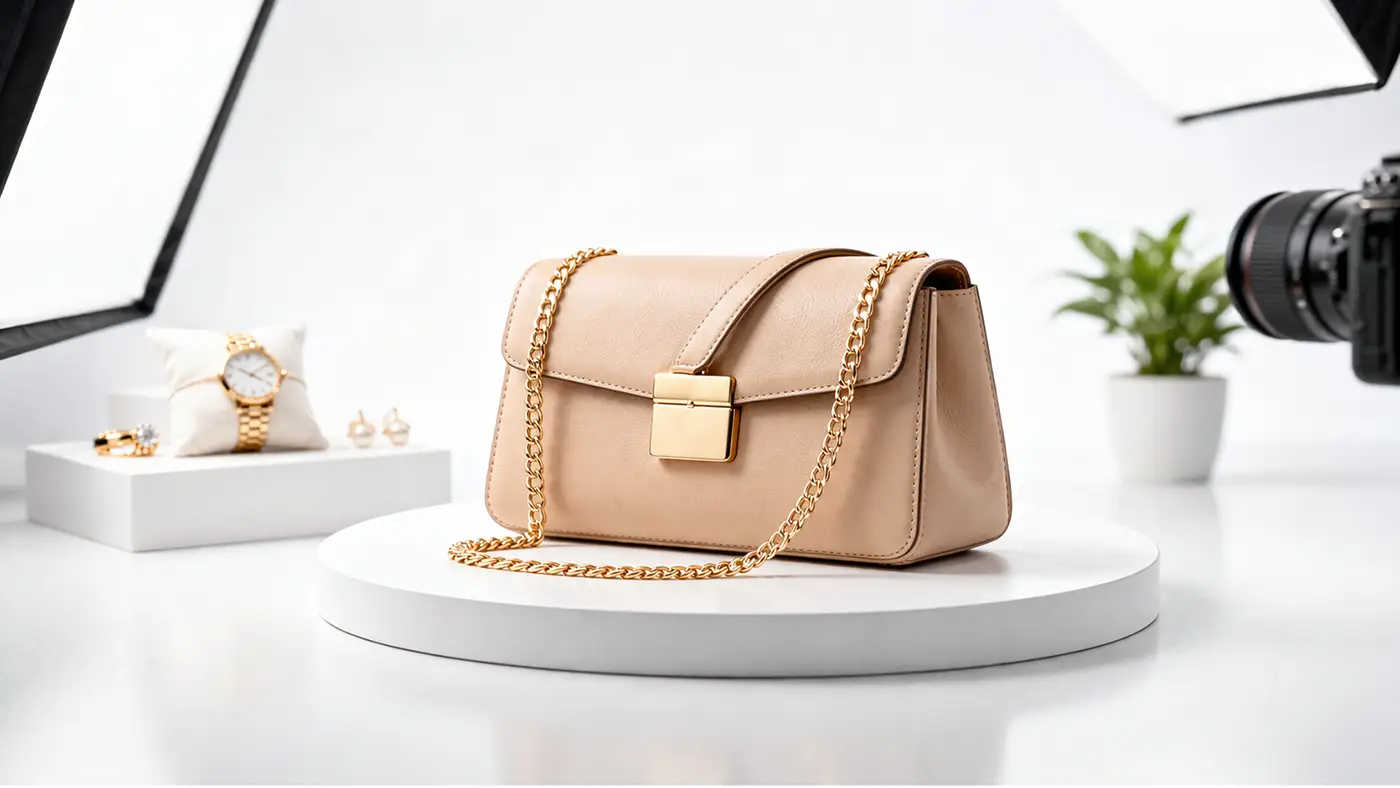
Creative jewelry shoots are essential to reflect the realism and natural beauty of a bride. Bridal jewelry pieces require careful attention to lighting, background, and camera settings. A photographer can use a DSLR or mirrorless camera with a macro lens to capture every detail. A tripod is essential to hold the camera so you can eliminate the slightest shake. It helps you to maintain perfect framing, adjust lighting, and shoot close-up details. Diffused lighting is essential for soft, even illumination and minimizing reflections in jewelry photography. Lightboxes, softboxes, reflectors, or diffusers help control shadows and achieve a balanced, professional look.

Importance of Lighting in Bridal Jewellery Shoot
Lighting is crucial in jewelry photography, as it highlights reflections, textures, and intricate details. You can use tools like ring lights, side lighting, and reflectors to enhance brilliance, add depth, and ensure clarity. Proper lighting creates a romantic atmosphere and enhances the brilliance and detail of bridal jewelry and models. Effective lighting techniques reduce harsh shadows and enhance the bride’s natural elegance. It enables photographers to emphasize particular features, textures, and intricate details of bridal jewelry. Correct lighting ensures color accuracy, like white light in the 5000K-5500K range, representing the true, natural colors of metals and gemstones. Good lighting ensures proper exposure, reduces noise, and prevents overly dark or washed-out images.
Appropriate Camera Settings for Bridal Photography
Appropriate camera settings are required to capture the intricate design and sparkle of bridal jewelry. A photographer should use a low ISO (100–200) for clear images, 800–1600 for indoor settings, and 3200–6400 or higher for dimly lit areas like receptions and dance floors. Adjust the aperture based on the desired effect. A high f-number (f/11–f/16) keeps more of the jewelry in focus and greater depth of field. Set a moderate shutter speed to ensure sharpness and prevent motion blur in your shots. You can use shutter speed 1/200 for portraits and couple shots, 1/250 for group and formal photos, 1/50 to 1/60 sec for reception and dance floor. Shoot in RAW format and use single-point autofocus to capture precise, editable, and detailed jewelry images.
Choosing the Perfect Background
Choosing the right background is crucial in bridal jewelry photography. Background consistency is key for a cohesive portfolio or catalog of bridal jewelry. A busy background can distract from the jewelry and hide its fine details.
Plain white or off-white backgrounds provide a clean, classic, and professional look, perfect for e-commerce. You can use seamless paper or foam boards with even, bright lighting to prevent a dull appearance.
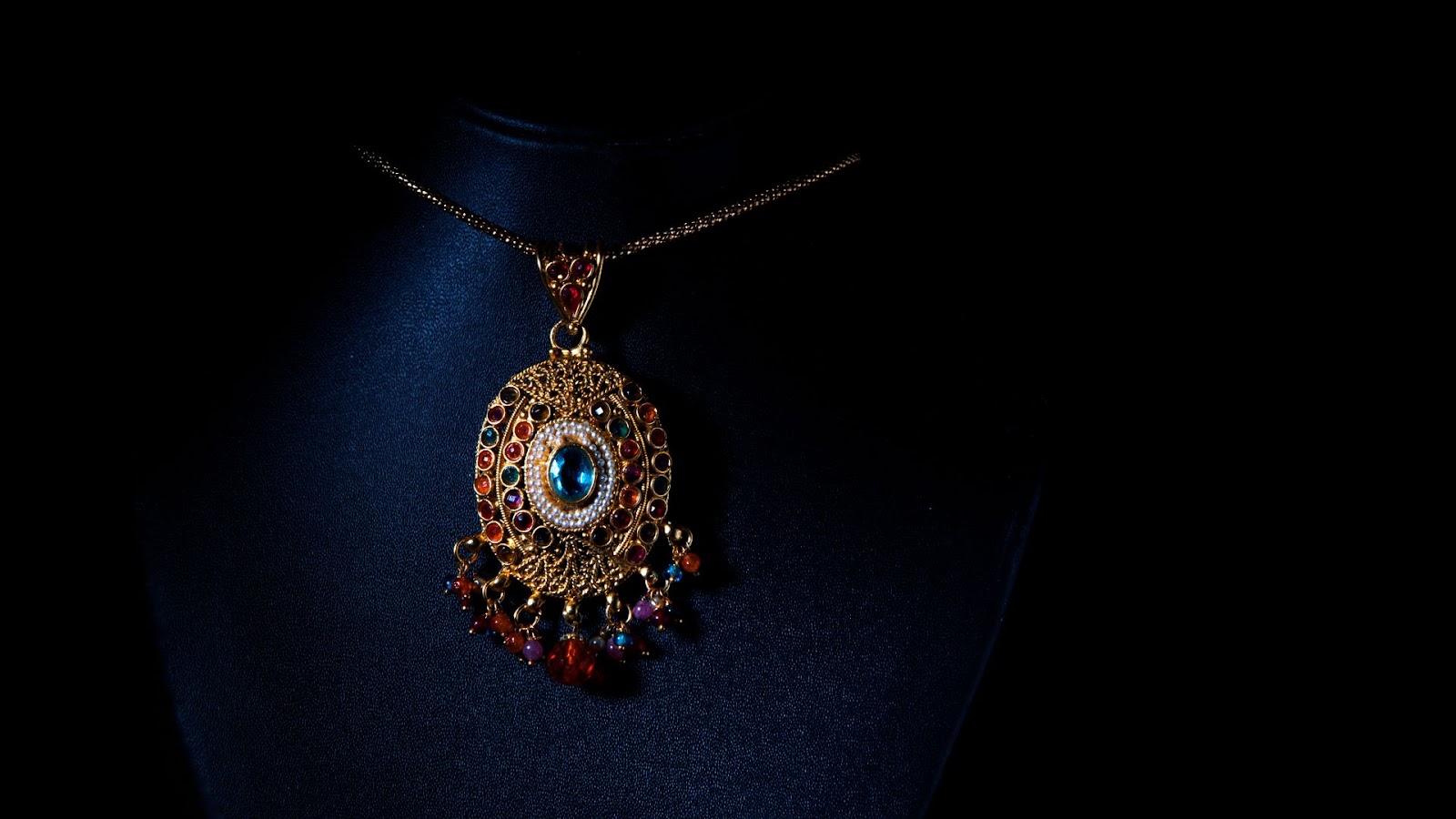
lack or dark backgrounds create a dramatic, luxurious, and elegant look, perfect for white gold, silver, diamonds, and colorful gemstones. A bridal photographer can use materials like velvet or glossy acrylic boards to add depth to shots. You need to ensure proper lighting and keep surfaces free of lint and dust to highlight the jewelry effectively.
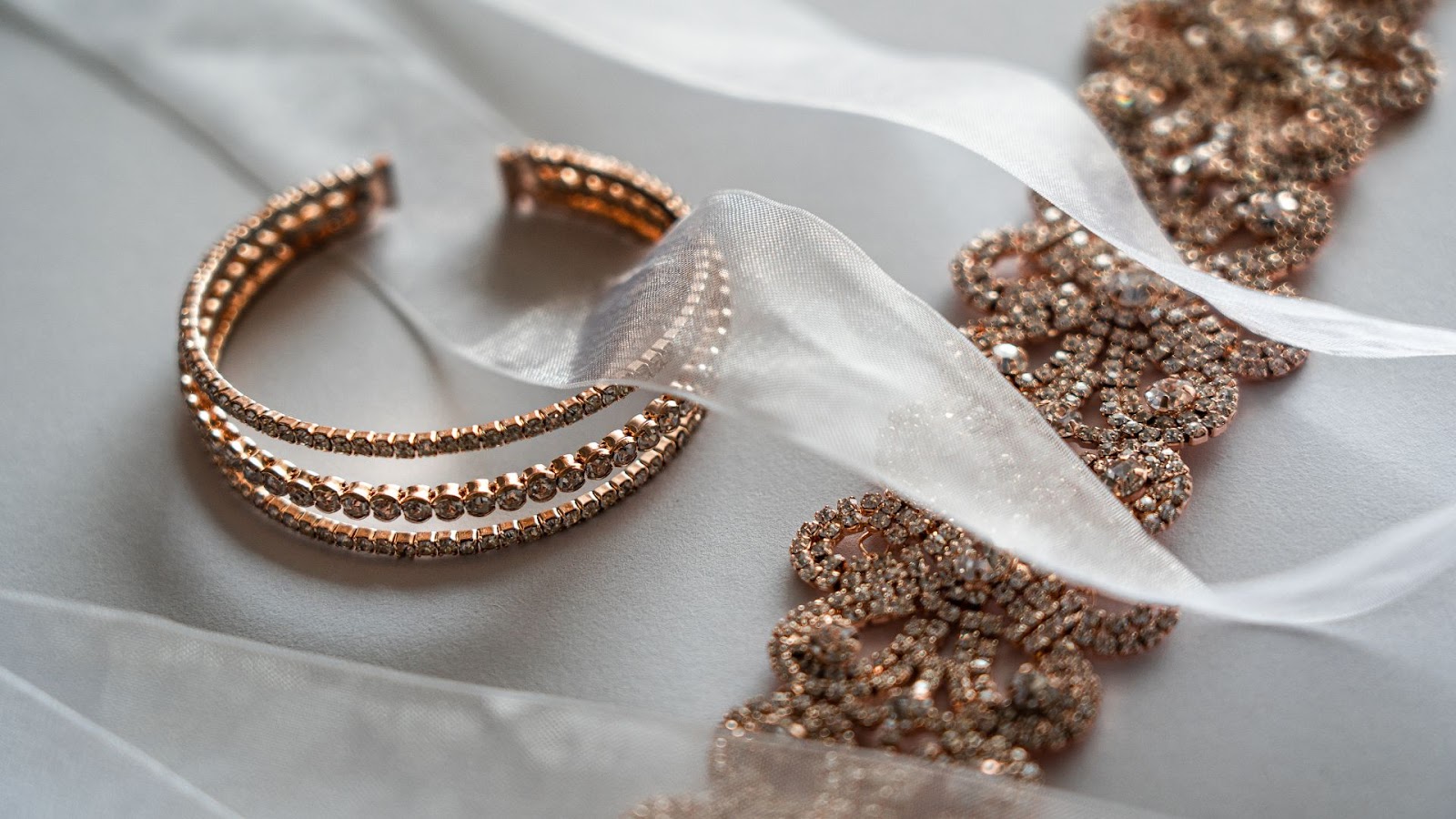
Fabrics backgrounds like velvet, satin, and linen create a soft, elegant, and romantic atmosphere, ideal for traditional or vintage-style jewelry. Arrange the fabrics in gentle folds to add texture and visual appeal. Velvet gives a luxurious, rich look, while linen provides a natural, understated charm.
Lifestyle and model photography showcase jewelry in real-life contexts, making it easier for buyers to imagine wearing it. Select models whose skin tones and clothing harmonize with the jewelry.
Natural textures background such as marble, wood, and stone, create an organic, earthy, and sophisticated backdrop. Light-colored wood pairs well with gold pieces, while dark wood complements silver.
Creative Posing and Styling on Bridal Jewelry Models
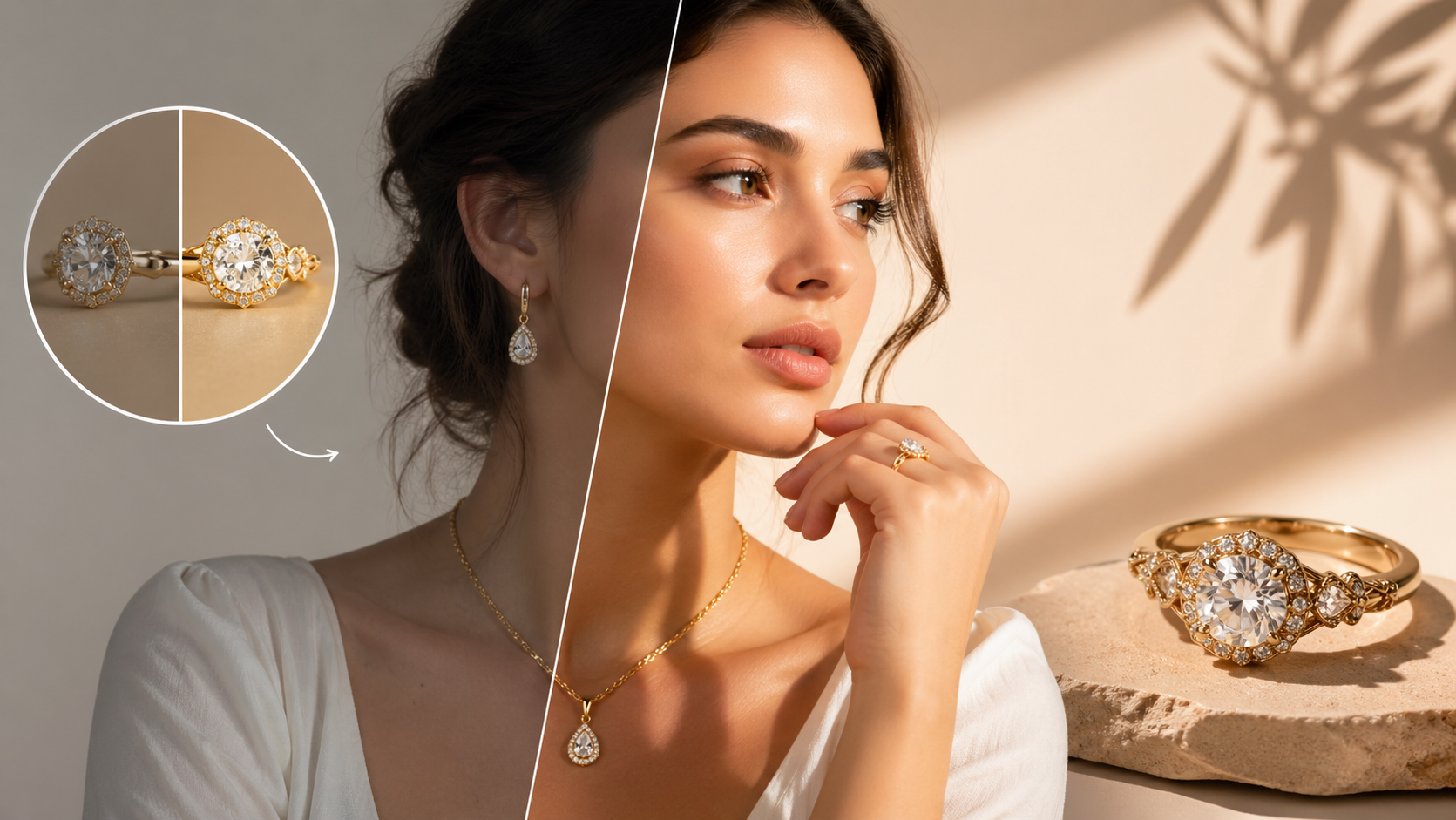
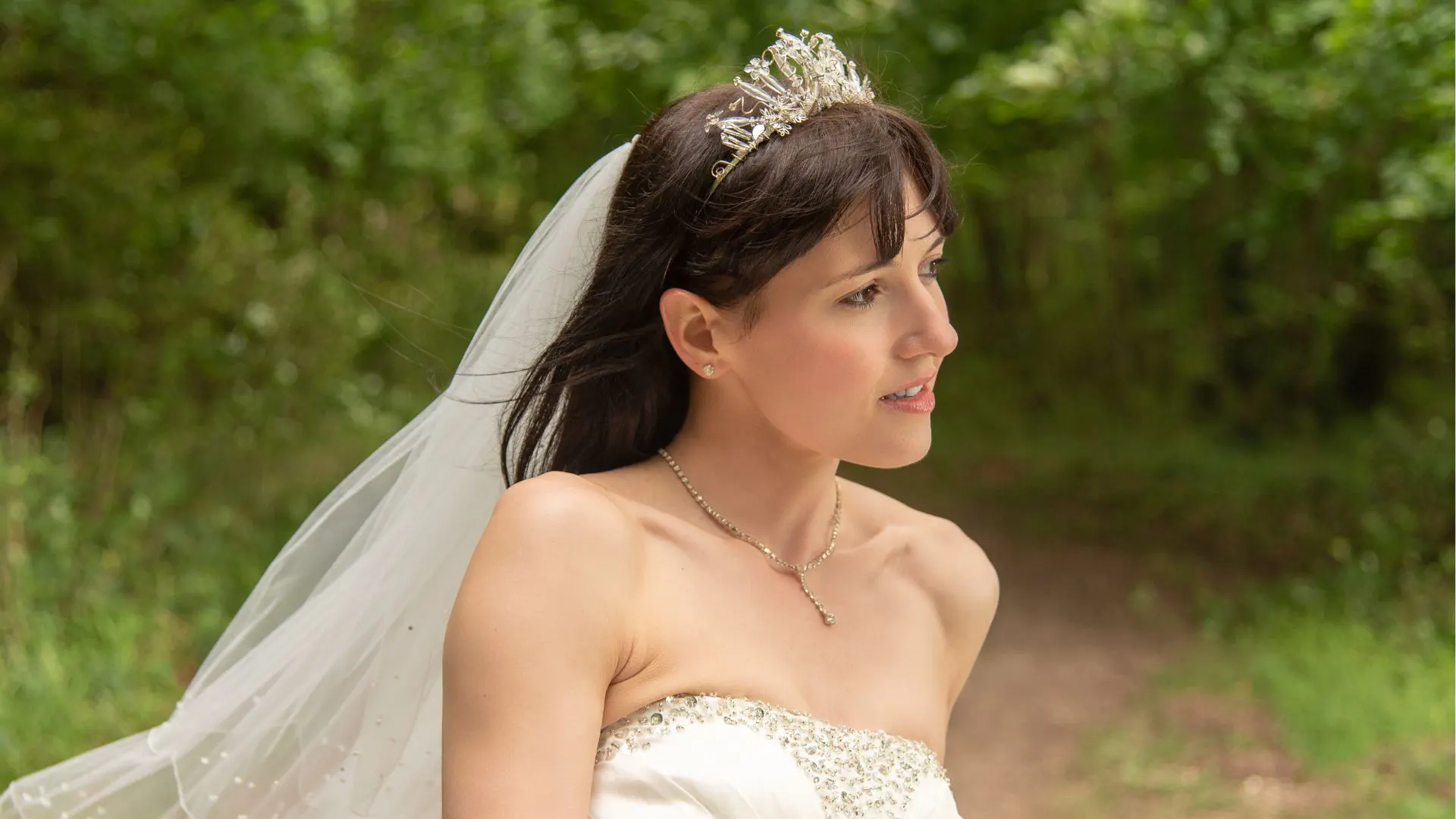
You should focus on romance, elegance, emotion, and details for creative posing and styling of bridal jewelry models. A photographer needs to capture natural hand gestures to elegantly showcase bracelets, bangles, and rings. Close-up shots of engagement and wedding rings add a natural, emotional touch. A slight head tilt and side profile help show earrings, necklaces, and jawlines clearly. Incorporate movements, like a gentle turn or shoulder glance, to add dynamism and highlight jewelry flow. Capture candid moments like genuine laughter, tender glances, or thoughtful gazes to create authentic, emotional images. Photo editing expert softly retouches the model’s chin, cheek, or collarbone, directing attention to earrings, necklaces, and rings.
Utilizing Props for Storytelling Bridal Jewellery Shoot
Using props can turn a simple picture of jewelry into a story. Adding props is a key part of creative jewelry photography ideas because it gives the photos more meaning and makes people feel something. But props should always make the jewelry look better, not worse. For example, putting a pearl necklace on a velvet cloth can make it feel fancy, and putting a diamond ring on a soft rose petal can make it feel romantic. Bohemian or nature-inspired designs look great with natural things like leaves, stones, or shells. Keep the props to a minimum and make sure they fit with the style and brand of the jewelry.
Capturing Sparkle and Brilliance
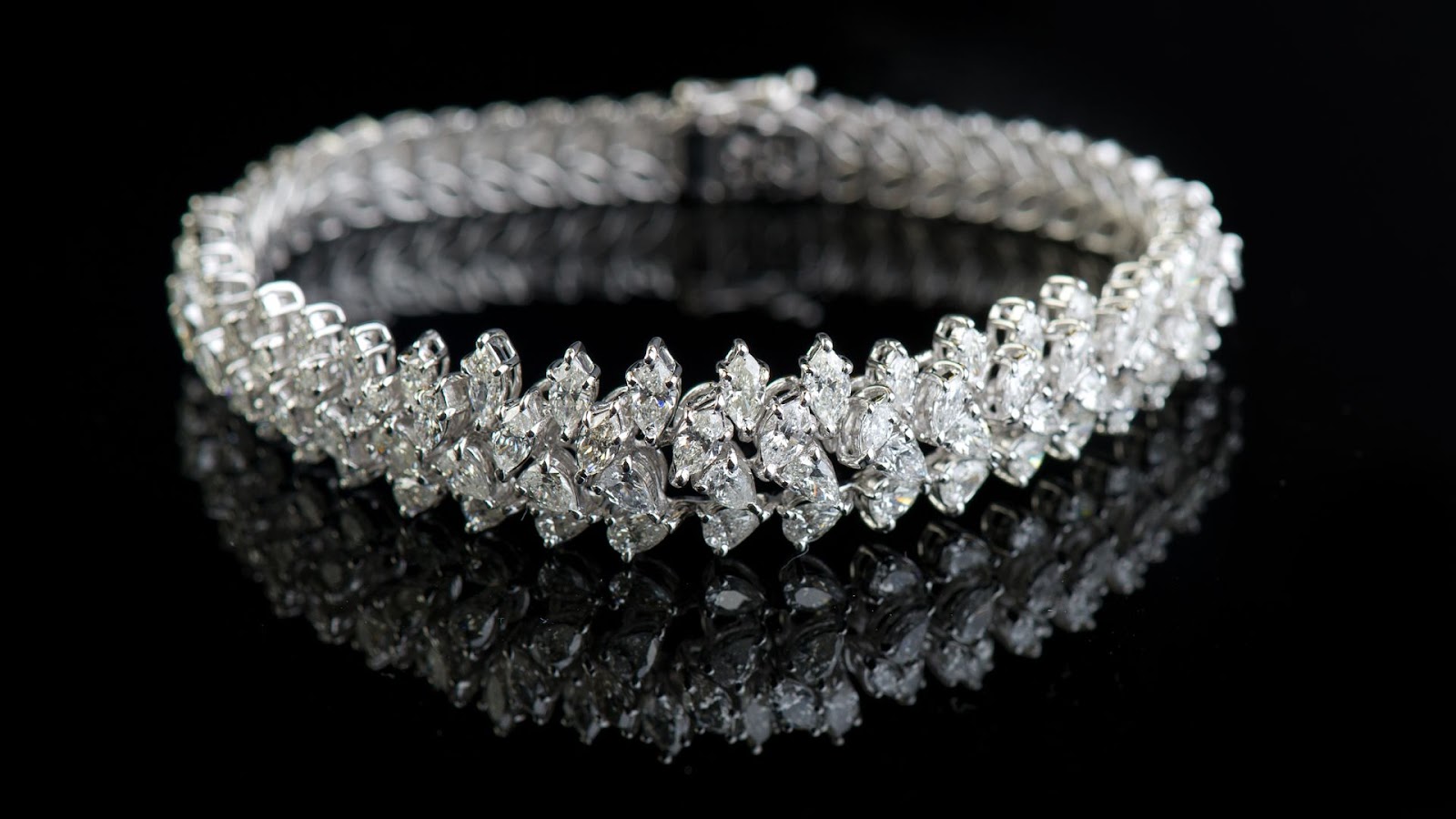
One of the most challenging aspects of a bridal jewelry shoot is capturing the shine of metals and the sparkle of gemstones. This is where creative jewelry photography ideas truly come into play. Using translucent materials to diffuse light helps control reflections and ensures even illumination. For gemstones, adjusting the light angle to create sparkle without overwhelming the frame is essential. Combined with careful post-processing, this technique makes jewelry photos truly stand out.
Advanced Tips for Bridal Jewellery Shoot
Right Angles for Bridal Jewellery Shoot
The way you frame and angle your bridal jewellery shoot significantly impacts the final result. Exploring unique angles is one of the simplest yet most effective creative jewelry photography ideas. Instead of traditional straight-on shots, try shooting from above, below, or at a diagonal.
Close-up shots highlighting specific details, such as the cut of a gemstone or the texture of a metal band, can be captivating. Incorporating wide-angle shots can showcase the jewelry in context, such as being worn or paired with complementary pieces. A mix of perspectives adds variety and depth to your portfolio.
Leveraging Technology for Innovation
Incorporating technology can open new doors for implementing bridal jewellery shoot ideas. Tools like 360-degree photography, augmented reality (AR), and 3D imaging offer interactive and immersive experiences for viewers. 360-degree photography allows customers to view jewelry from every angle, while AR enables them to virtually try on pieces. These technologies not only make your photos stand out but also enhance the shopping experience, especially in the digital age.
Setting Up Your Jewelry Photography Studio
To get the most out of your creative jewelry photography ideas, you need a well-equipped setup. Buy a good camera, a macro lens, a tripod, some lights, and some backgrounds. With a little creativity, you can also get professional results with DIY setups. For instance, you can make a lightbox out of a cardboard box and some diffusing material to get studio-quality lighting. Try out different setups to see which one works best for you and your style.
Post-Processing for Perfect Bridal Jewellery
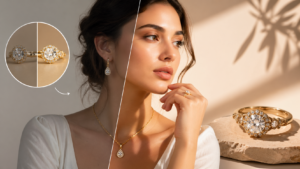
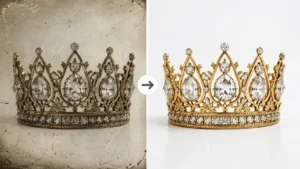
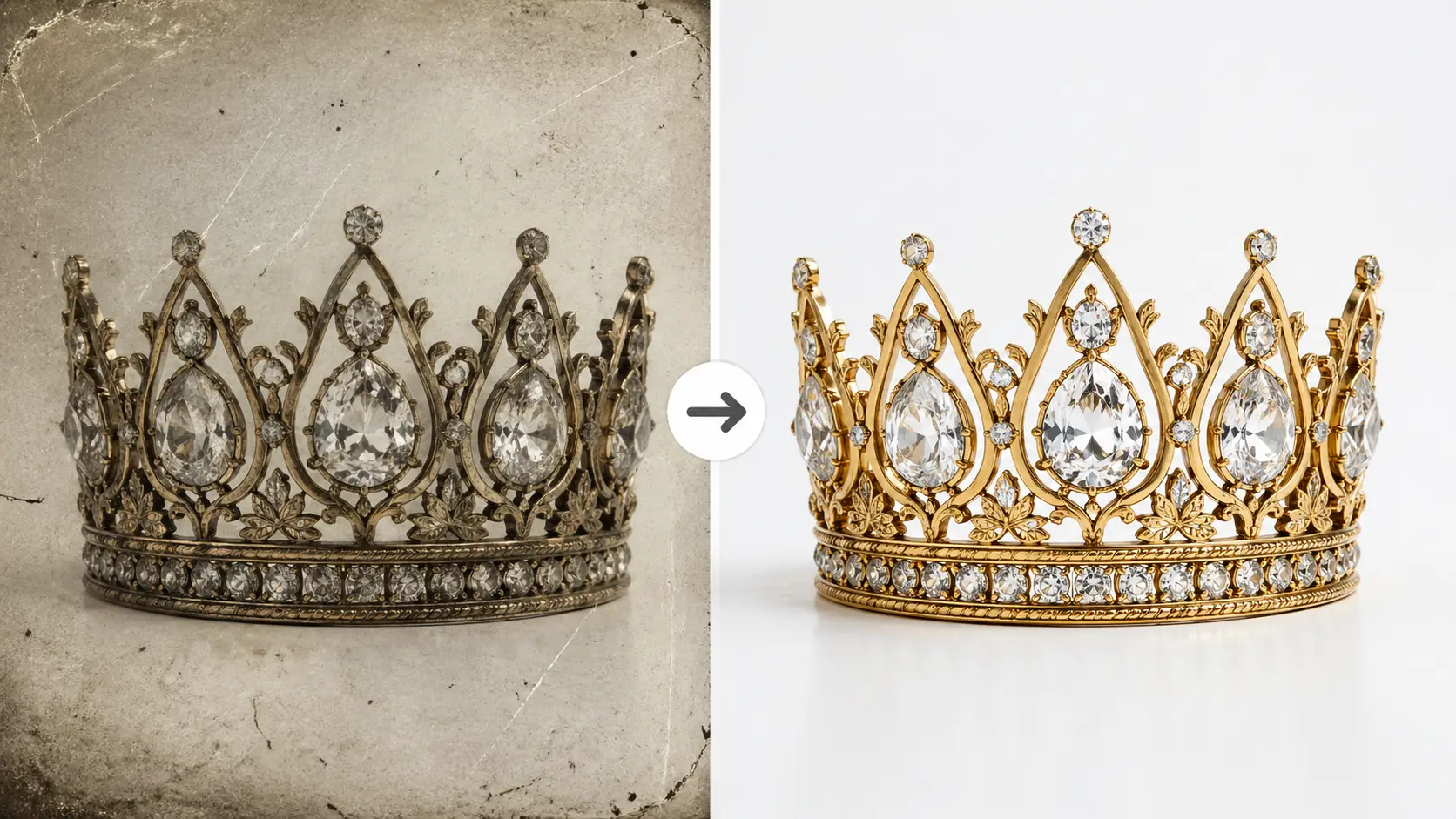
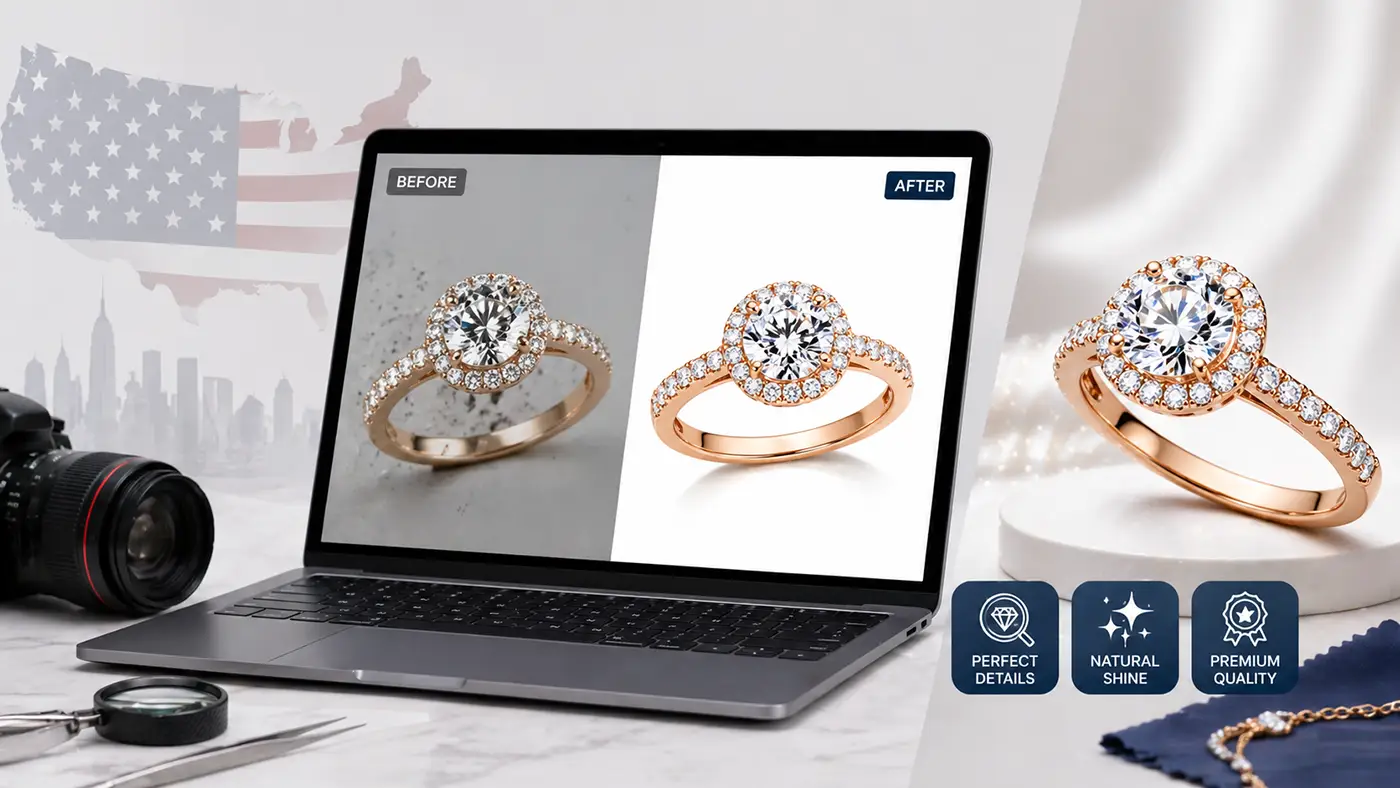
Jewelry retouching is an important step to make photos look professional. Post-processing helps enhance the image and correct any flaws. Using retouching tools, you can remove dust, scratches, and unwanted reflections. Software like Adobe Photoshop or Lightroom allows you to adjust brightness, contrast, and sharpness. Focus on bringing out the true colors and textures, as over-editing can make the jewelry look fake. For the best results, you can seek help from a professional jewelry retouching company.